Takt Time vs. Cycle Time vs. Lead Time: Differences Explained

Takt Time vs. Cycle Time vs. Lead Time: Differences Explained

Optimizing manufacturing processes and supply chain management requires a thorough understanding of how time impacts operations. 

Metrics like Takt Time, Cycle Time, and Lead Time are crucial tools that help organizations streamline production, enhance efficiency, and, at the end of the day, make sure that products reach consumers when they need them.

What Is Takt Time?

Takt time is the required pace of production needed to meet customer demand. It represents the maximum allowable time to produce one unit so that production output matches demand. It is a core lean manufacturing metric that defines the ideal production pace.

Some see it as the heartbeat of their production line, dictating the necessary “tempo” to fulfill orders optimally. Actually, the term “Takt” comes from the German word for a pulse or a beat!

What Is Cycle Time?

Cycle time is the actual time required to produce one unit at a given process or production step. It measures how long it takes for a unit to be completed before the next unit is finished under normal operating conditions. It reflects the observed production time rather than the planned or standard time.

What Is Lead Time?

Lead time is the total elapsed time from order placement to final delivery. It includes all waiting, processing, and transportation time across the entire fulfillment process. This metric extends beyond internal production processes, encompassing all activities visible to the customer and affecting external stakeholders.

Lead Time is a vital metric with applications across supply chain management, manufacturing, and project management.

Lead Time vs. Cycle Time vs. Takt Time: The Crucial Distinctions

While all three metrics – Takt Time, Cycle Time, and Lead Time – are fundamental for managing and optimizing time in production and also service delivery, they serve distinct purposes and measure different aspects of your operations.

Key Aspects Of Takt Time

Takt Time deals with the speed at which production must run to fulfill demand.

In more detail, Takt Time:

  • Aligns production with customer needs. It helps avoid overproduction, which leads to excess inventory, higher storage, transportation, and management costs. At the same time, it shields from instances of underproduction, which in turn result in shortages and delays, potentially leading to lost sales.
  • Sets realistic time targets for production teams.
  • Standardizes work processes and helps identify overworked or idle teams, streamlining workload distribution.
  • Improves the predictability of related metrics and enhances production efficiency.

How To Calculate Takt Time

Here’s the Takt Time calculation formula:

Takt Time = Available Production Time / Customer Demand

Available production time is the actual production or working time, excluding non-production tasks like breaks, meetings, scheduled maintenance, and shift transitions.

Customer demand is the quantity of products or services required by customers during the same period, often expressed in daily or weekly quantities.

Key Aspects Of Cycle Time

Cycle time measures the efficiency of manufacturing operations and workflows, ultimately leading to faster delivery and demand fulfillment.

So, what Cycle Time actually does is:

  • Measure the efficiency of the production process.
  • Identify bottlenecks and areas of inefficiency within a process.
  • Provides meaningful data to adjust production time and improve overall workflow.
  • Supports performance measurement metrics such as Overall Equipment Effectiveness (OEE) and throughput analysis.

Calculating Cycle Time

Here’s how you can calculate Cycle Time:

Average Cycle Time = Net Production Time / Number of Units Produced

Net production time is the available time your team has to finish a project, excluding any time spent not working on the project (e.g., meetings, breaks).

Key Aspects Of Lead Time

Lead time provides an overview of the entire order fulfillment process from the customer’s perspective. It includes three main stages: pre-processing, processing, and post-processing time. Other non-value-added times, like queue time while waiting for materials or equipment and transportation time, are also included in lead time. 

Lead time optimizes manufacturing operations in various ways:

  • Offers organizations a general overview of manufacturing and sales operations and helps investigate delays in solution delivery to the customer.
  • Minimizing lead time enhances operations, boosts productivity, increases output, and maximizes profitability.
  • Shorter lead times typically result in increased customer satisfaction, reduced labor costs, greater order throughput, and more.

Lead Time Calculation

Here’s the formula for calculating lead time:
Lead Time = Time/Date Order Delivered − Time/Date Order Received

You could also calculate lead time in manufacturing by adding the time it takes for every separate process, namely:

Lead Time (Manufacturing) = Pre-processing Time + Processing Time + Post-processing 

Optimizing Your Pharma Manufacturing Metrics For Efficiency

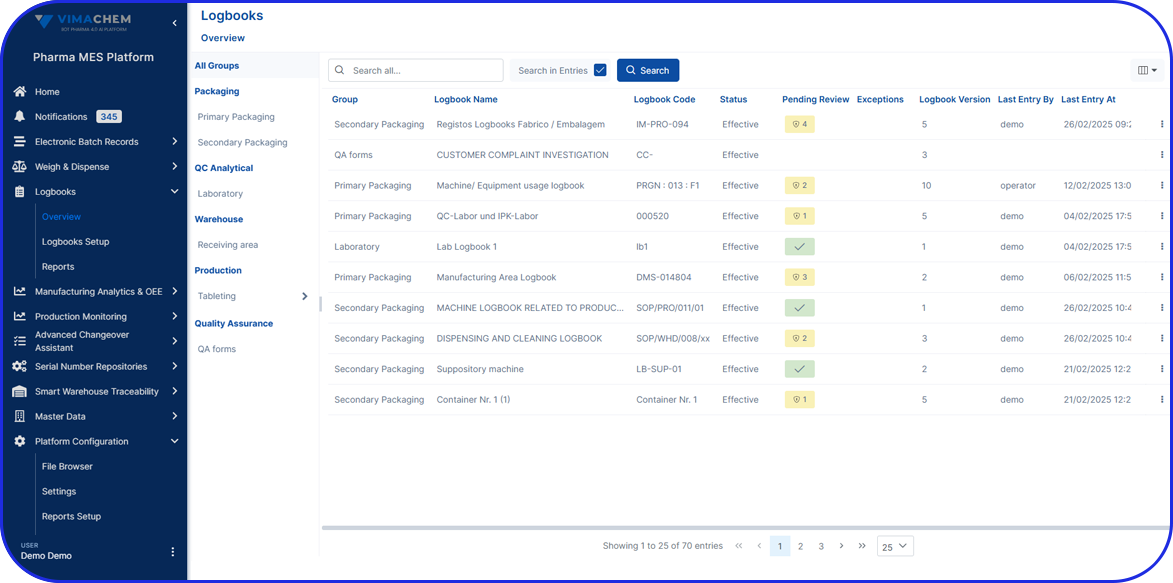
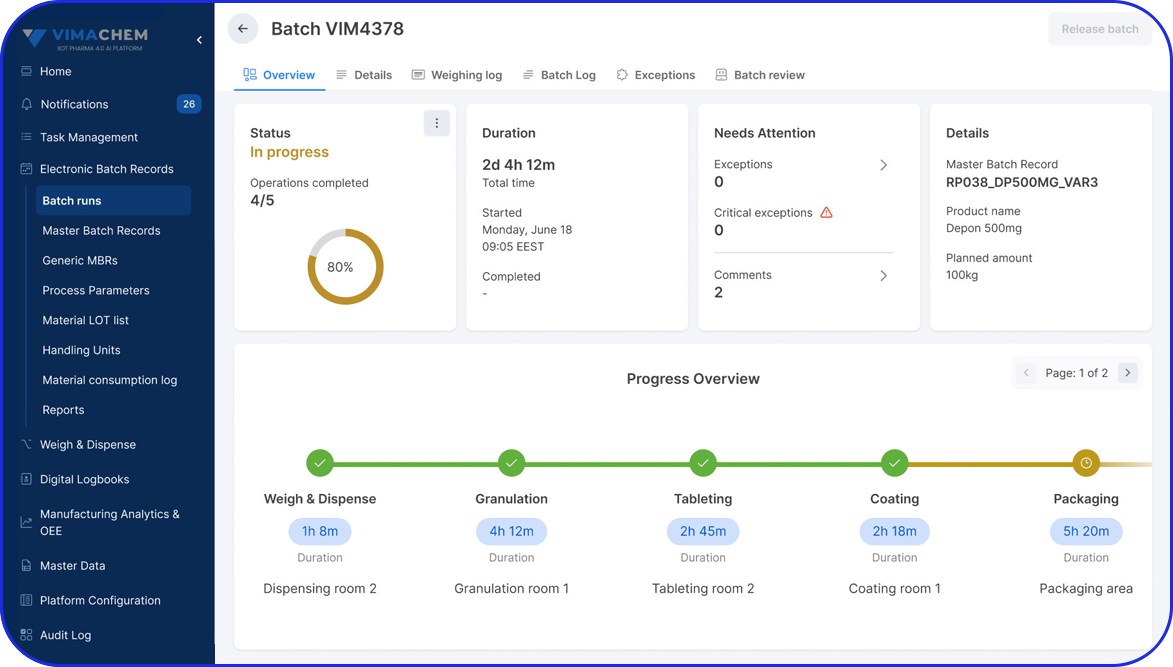
Vimachem’s integrated Manufacturing Execution System (MES) for pharma and biopharma encompasses core modules like Electronic Batch Records (EBR) and OEE, providing pharmaceutical manufacturers with a robust digital framework to optimize critical production metrics such as Cycle Time, Lead Time, and Takt adherence.

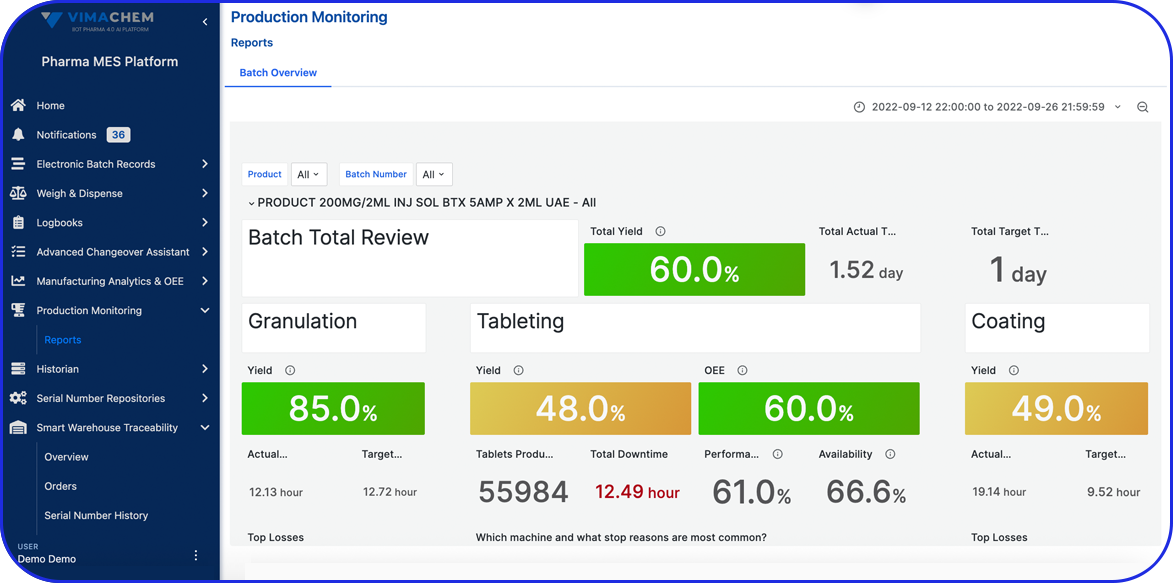
Enabled by core Pharma 4.0 technologies, such as AI and IIoT, the Vimachem MES offers real-time monitoring and data acquisition that deliver actionable insights. Additionally, the platform’s Machine Data Connectivity module automates the capture and contextualization of machine data in real time, providing visibility and data-driven decision support that enable shorter cycle times, reduced production delays, and more efficient workflows while meeting customer demand.

The Vimachem MES, EBR & OEE systems help you step into the era of Pharma 4.0 with confidence. Request a demo.

// Find out more
Taking advantage of IoT’s advanced capabilities, the Vimachem AI Pharma MES platform supports life science companies in their digital transformation journey, enabling them to achieve compliance, improved product quality, and business excellence.

GMP Execution

From error-prone paperwork to accelerated, compliant batch release.

Automate batch execution and review with built-in compliance. Reduce errors, eliminate manual logging, and shorten release cycles – so quality teams can focus on quality, not backlogs.

From inconsistent weighing to verified-first-time accuracy.

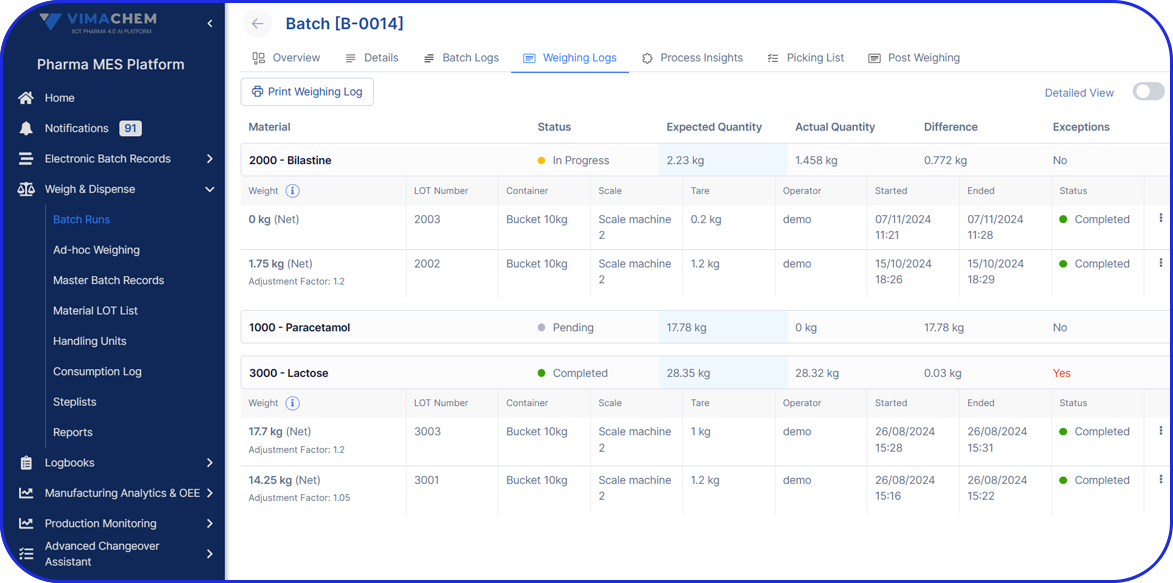
Digitally guide operators through material weighing and dispensing. Improve accuracy, ensure traceability, and connect seamlessly with inventory and batch records.

From paper logs to intelligent, mobile-ready records.

Digitize equipment and process logs to ensure compliance and audit-readiness. Configurable templates, mobile data entry, and real-time access reduce manual effort and boost data integrity.

From scattered documents to controlled compliance at scale.

Centralize document creation, approval, and version control. Ensure teams always follow the latest SOPs.

GMP Efficiency

From guesswork to real-time performance insights.

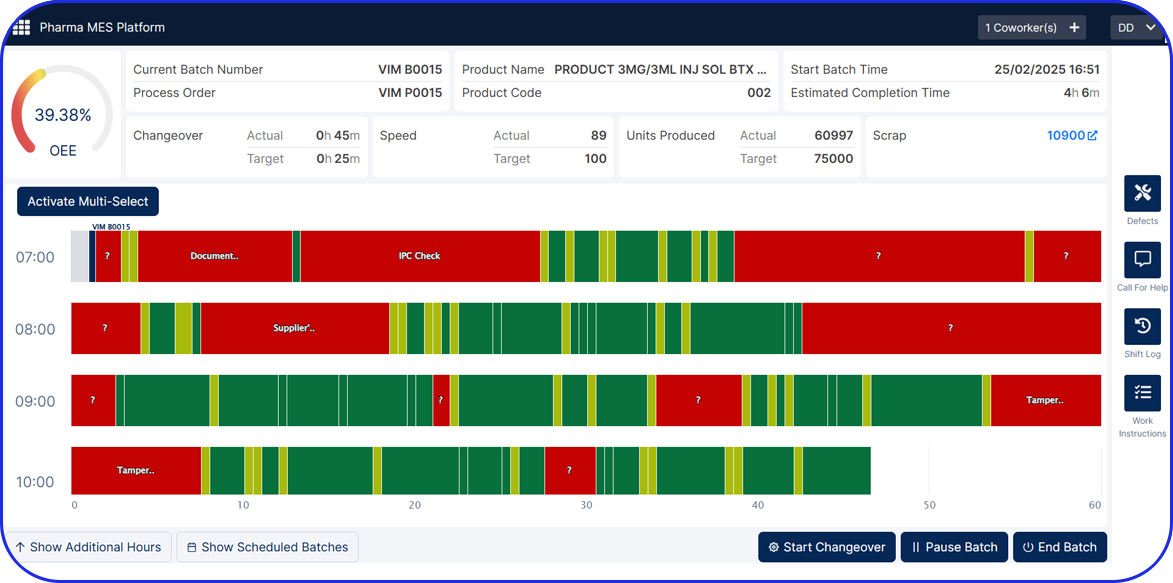
Track line performance, equipment efficiency, and downtime trends. Real-time dashboards give operations, maintenance, and Continuous Improvement teams the insights they need to improve continuously.

From downtime drag to agile, data-driven changeovers.

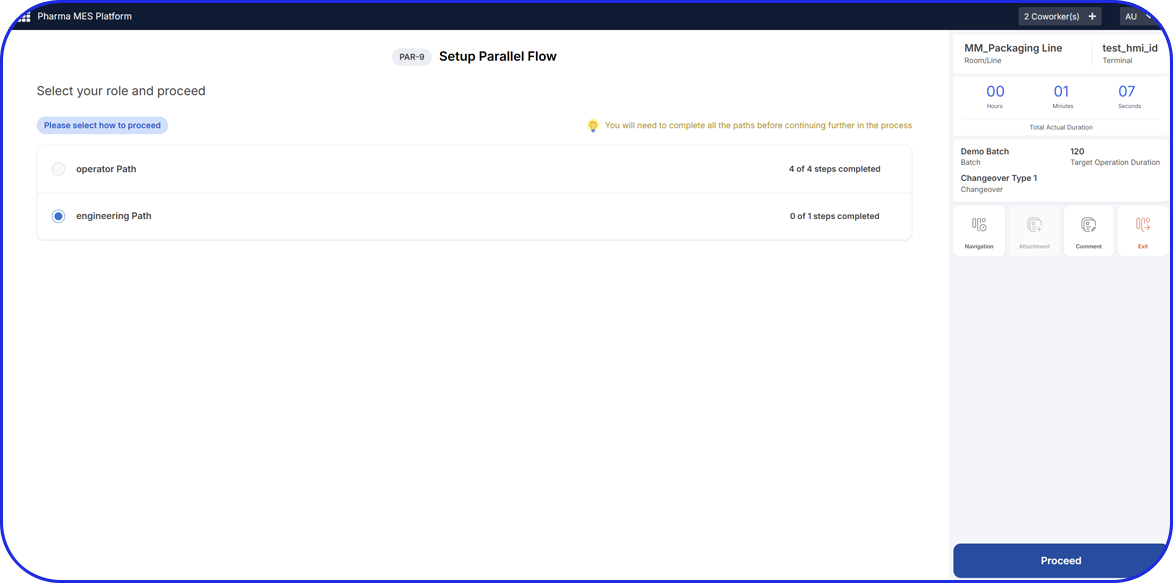
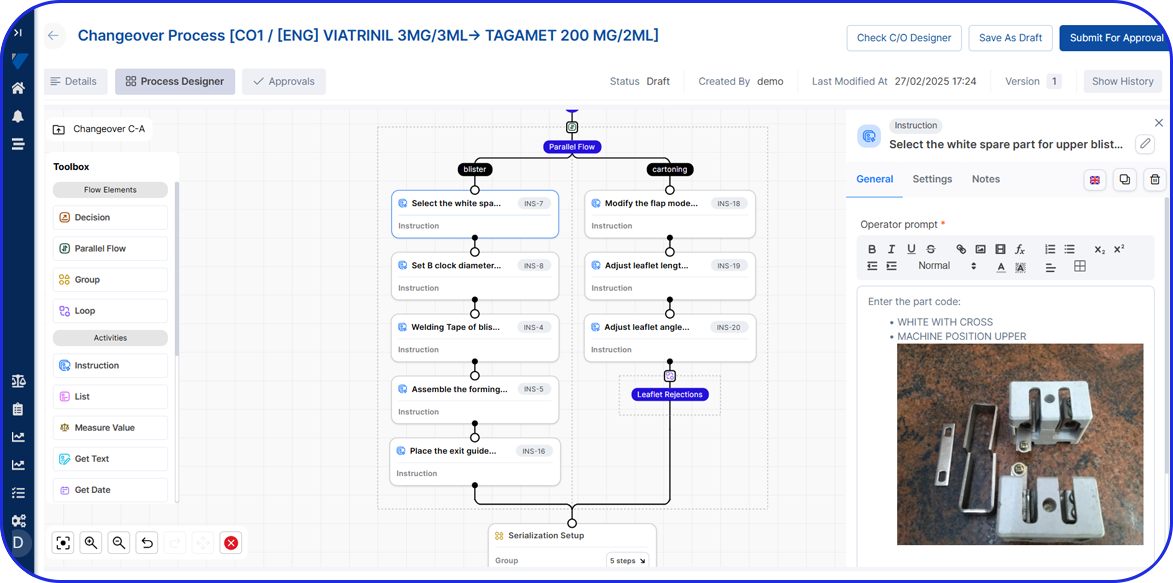
Digitize and streamline changeovers with guided instructions and real-time feedback. Cut changeover times and reduce variability while capturing execution data for continuous improvement.

From tribal knowledge to consistent execution across shifts.

Deliver smart, digital SOPs to frontline teams. Improve adherence, minimize training time, and standardize operations with traceable, real-time guidance.

From fragmented visibility to upstream process control.

Gain real-time insight into blending, granulation, and other bulk operations. Identify variability, reduce waste, and maintain consistent process quality.

From missed tasks to reliable, real-time execution.

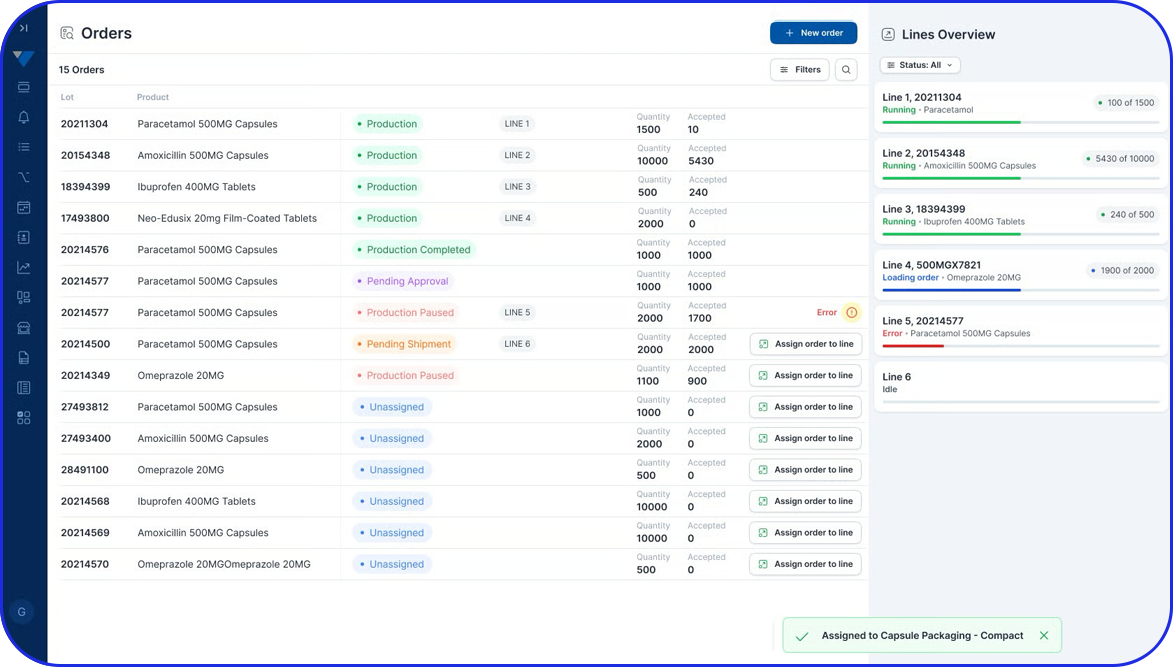
Assign and track critical shop-floor tasks with live dashboards, compliance checks, and alerts. Ensure nothing slips between shifts or across departments.

From disconnected machines to unified shop floor intelligence.

Capture real-time data from any machine or line. Securely transmit and integrate with MES for visibility, traceability, and predictive analytics.

Track & Trace

From regulatory complexity to centralized serialization control.

Manage global serialization and aggregation across hundreds of lines. Integrates with any vendor, supports global standards, and provides real-time oversight at site and enterprise level.

From siloed systems to full material traceability.

Track every material, lot, and movement from warehouse to batch. Android-compatible, ERP-integrated, and scalable, so you’re always audit-ready and inventory-aligned.

From disconnected rework to streamlined, compliant aggregation.

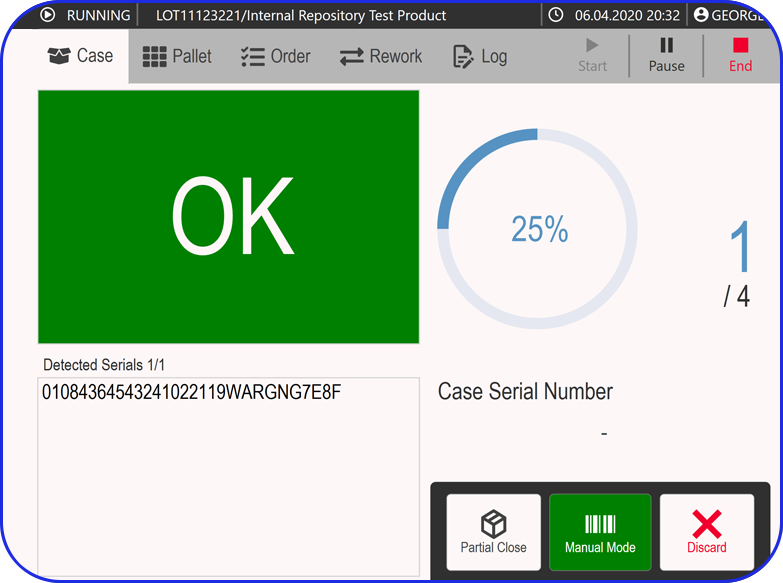
Easily aggregate serialized units on manual or offline lines. Support sampling, returns, and rework while maintaining full compliance, traceability, and seamless integration with existing systems.

Changeover Instructions & Analytics

Changeover Instructions & Analytics

From downtime drag to agile, data-driven changeovers.
Digitize and streamline changeovers with guided instructions and real-time feedback. Cut changeover times and reduce variability while capturing execution data for continuous improvement.

A Modular Platform. A Unified Ecosystem.

Manufacturing Analytics & OEE

From guesswork to real-time performance insights.
Track line performance, equipment efficiency, and downtime trends. Real-time dashboards give operations, maintenance, and Continuous Improvement teams the insights they need to improve continuously.

Manual Aggregation Module (ΜΑΜ)

Manual Aggregation Module // ΜΑΜ

From disconnected rework to streamlined, compliant aggregation.
Easily aggregate serialized units on manual or offline lines. Support sampling, returns, and rework while maintaining full compliance, traceability, and seamless integration with existing systems.

Smart Warehouse Traceability (SWT)

Smart Warehouse Traceability // SWT

From siloed systems to full material traceability.
Track every material, lot, and movement from warehouse to batch. Android-compatible, ERP-integrated, and scalable, so you’re always audit-ready and inventory-aligned.

Serialization Site Manager

Serialization Site Manager // SSM

From regulatory complexity to centralized serialization control.
Manage global serialization and aggregation across hundreds of lines. Integrates with any vendor, supports global standards, and provides real-time oversight at site and enterprise level.

Electronic Logbooks (eLog)

Electronic Logbooks // eLog

From paper logs to intelligent, mobile-ready records.
Digitize equipment and process logs to ensure compliance and audit-readiness. Configurable templates, mobile data entry, and real-time access reduce manual effort and boost data integrity.

Operator Training / Digital Work Instructions

Operator Training

From undocumented knowledge to consistent execution across shifts.
Deliver smart, digital SOPs to frontline teams. Improve adherence, minimize training time, and standardize operations with traceable, real-time guidance.

Weigh & Dispense (W&D)

Weigh & Dispense // W&D

From inconsistent weighing to verified-first-time accuracy.
Digitally guide operators through material weighing and dispensing. Improve accuracy, ensure traceability, and connect seamlessly with inventory and batch records.

Electronic Batch Records (eBR)

Electronic Batch Records // eBR

From error-prone paperwork to accelerated, compliant batch release.
Automate batch execution and review with built-in compliance. Reduce errors, eliminate manual logging, and shorten release cycles – so quality teams can focus on quality, not backlogs.

Bulk Production Analytics (BPA)

Bulk Production Analytics // BPA

From fragmented visibility to upstream process control.
Gain real-time insight into blending, granulation, and other bulk operations. Identify variability, reduce waste, and maintain consistent process quality.