What Is Changeover Time & How To Reduce It In Manufacturing
What Is Changeover Time & How To Reduce It In Manufacturing
Today, more than ever, the ability to consistently deliver high-quality products on schedule helps manufacturers maintain customer satisfaction and a competitive edge.
One of the ways to achieve this is initiating production runs as quickly and efficiently as possible, minimizing the time required to switch production from one product or batch to the next.
This is where changeover time comes in.
Artificial intelligence (AI) And Machine Learning (ML)
Today, AI and ML are increasingly used in all the different stages of drug development.
During drug development, for example, Artificial Intelligence and Machine Learning analyze vast datasets in order to identify promising drug targets and create new drug compounds.
In many cases, they are programmed to identify how to repurpose existing pharmaceuticals for different conditions, which is much faster and less costly than new drug development.
For products already in use, ML and AI offer personalized treatment plans by analyzing and evaluating patient history data.
Gene Editing Technologies And Cell Therapies
Technologies such as CRISPR-Cas9 are changing the game for drug development through precise modifications of DNA sequences that produce targeted therapies for genetic diseases.
Scientists see here a promising potential to cure previously untreatable diseases, offering hope for patients with genetic disorders, cancer, and other life-threatening conditions.
Presently, however, there are some core challenges associated with these: manufacturing complexity, high costs, and onerous regulatory approval paths.
What Is Changeover Time?
Next-Gen Manufacturing Execution Systems (MES) For Pharma
In manufacturing, changeover time is the time needed to switch a machine or production line from making one item to another. It counts from the moment the last product of one batch is completed and ends when the first acceptable product of the next run is produced.
Reducing changeover time improves your manufacturing KPIs, such as OEE (Overall Equipment Effectiveness), and optimizes production efficiency.
How To Measure Changeover Time
Traditionally, changeover times were measured by hand, with a supervisor observing the entire changeover process and manually recording the entire time needed. Later on, video recordings helped companies analyze each step and identify bottlenecks.
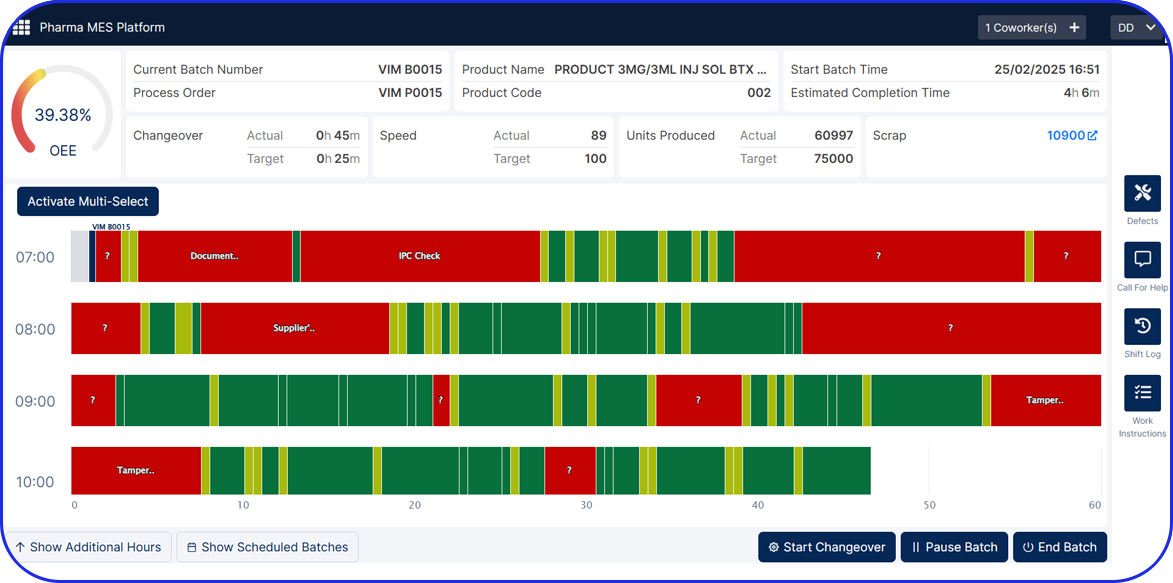
Today, though, connected machine-monitoring systems automatically record timestamps and production events in comprehensive reports.
Such tools automatically track events, from when a production line stops to the first acceptable product of the next run.
This approach offers real-time performance data and breaks down changeover procedures into discrete steps, allowing for detailed analyses and promoting better data-driven decisions.
What Are The Benefits Of Reducing Changeover Time?
Decreasing changeover time offers several advantages:
- Increased Productivity
It goes without saying that, by minimizing the time spent transitioning between production runs, there’s more time for the actual production, leading to a higher output and revenue potential. - Reduced Waste
In lean manufacturing, changeover time is considered necessary non-value-added time (setup). Reducing it decreases waiting and improves equipment utilization. Less time spent on changeovers increases productive capacity and lowers labor and machinery costs. - Enhanced Flexibility
When manufacturers can quickly switch between product lines, they can effectively respond to fluctuating demand, smaller batch sizes, and new product launches. - Improved Overall Equipment Effectiveness (OEE)
OEE in manufacturing helps evaluate how effectively operations are executed on the shop floor. So, optimizing process-related downtimes, such as changeovers, can quickly improve machine - Lower Inventory Levels
Rapid changeovers support lean and smaller-batch production approaches such as Just-in-Time (JIT), which, in turn, helps increase inventory turnover ratios, leading to higher efficiency. - Competitive Advantage
Improved changeover times help manufacturers quickly adapt production to meet diverse customer needs, thus gaining a competitive edge in the market.
How To Reduce Changeover Time In Manufacturing
So, how can you reduce changeover time? It all boils down to 3 key factors: process analysis, standardization, and technology.
Here are some things you can do:
Evaluate & Analyze Current Processes
Start with a thorough analysis of the existing changeover processes: identify steps, staff, tools, and materials needed, as well as the time taken for each step.
Today, IoT systems and AI tools automatically retrieve such data, compile it all in comprehensive reports, pinpoint areas of improvement, highlight bottlenecks, and support continuous improvement analysis.
Establish Standardized Work Instructions & SOPs
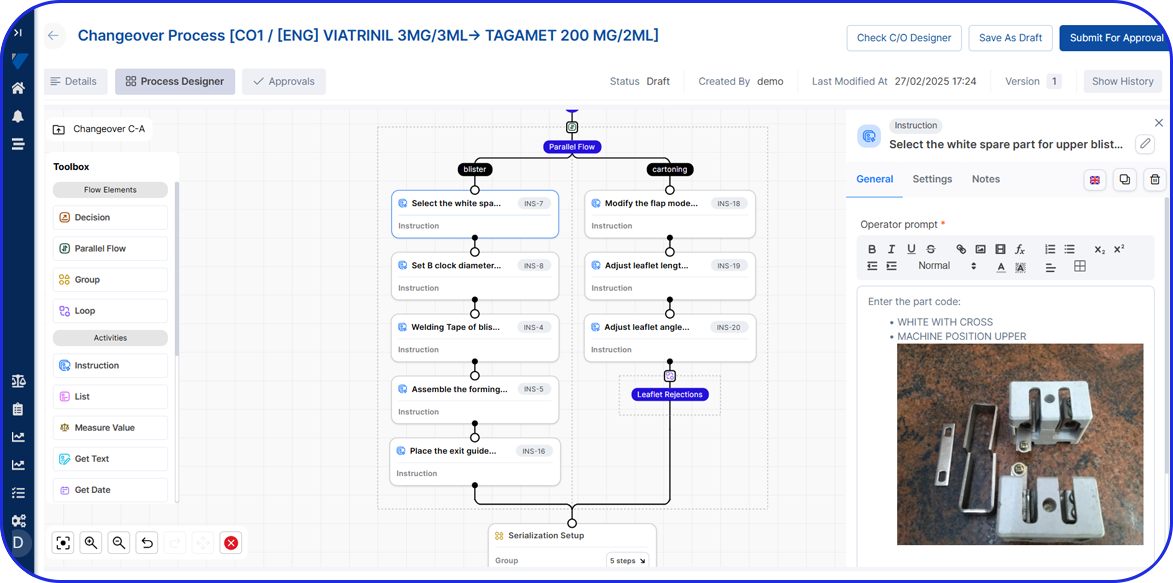
Updated work instructions and SOPs are vital for changeover efficiency. Such documents outline components and steps for each process, like equipment settings, required tools, and quality checks.
Following the Industry 4.0 initiative, digital work instructions and automated SOPs management help standardize procedures and improve execution consistency.
Utilize Quick Changeover Techniques
Implementing some simple yet effective modifications to equipment and processes can help reduce changeover time even more:
- Quick-release fasteners are faster to assemble and disassemble.
- Color-coding for parts, tools, and connections helps operators quickly identify the correct items and ensure proper assembly.
- Error-proofing devices prevent errors such as misassembled parts, reducing the need for adjustments and rework.
- Visual aids can streamline changeovers even further.
- Shadow boards ensure that all necessary tools are present and easily accessible and that missing tools can be quickly identified.
- Clearly marked settings and calibration points help operators adjust equipment quickly and accurately.
- Visual indicators for machine status, such as lights or signs, help coordinate changeover activities efficiently.
Prepare Materials & Equipment In Advance
Have all necessary materials, parts, and tools readily available at the workstation before the changeover begins and maintain equipment in good working order to prevent unexpected issues during changeovers.
Solicit Input & Engage The Team
Remember that operators and maintenance staff are actually those who perform the actual changeovers. That’s why they can offer invaluable hands-on knowledge and insights. Their feedback and participation in improvement initiatives can lead to practical and effective solutions.
Monitor & Communicate Changeover Times
Tracking and displaying changeover times can raise awareness and motivate teams to identify and implement improvements. At the same time, sharing best practices between shifts can also help standardize procedures.
To encourage teams even further, set realistic goals, provide feedback, and encourage open communication.
Leverage Technology & Automation
Current technologies, such as machine monitoring systems, digital work instructions, automation, and robotics, increase accuracy and, thus, reduce changeover times.
For instance, modern automated filling lines in pharmaceutical manufacturing are often designed with fewer component changes and faster change mechanisms, reducing changeover duration and shortening intervals between product runs. Automation software can also guide operators through complex changeover procedures, improving accuracy and consistency.
Indeed, today, utilizing the latest technology helps pharma and biopharma manufacturing thrive.
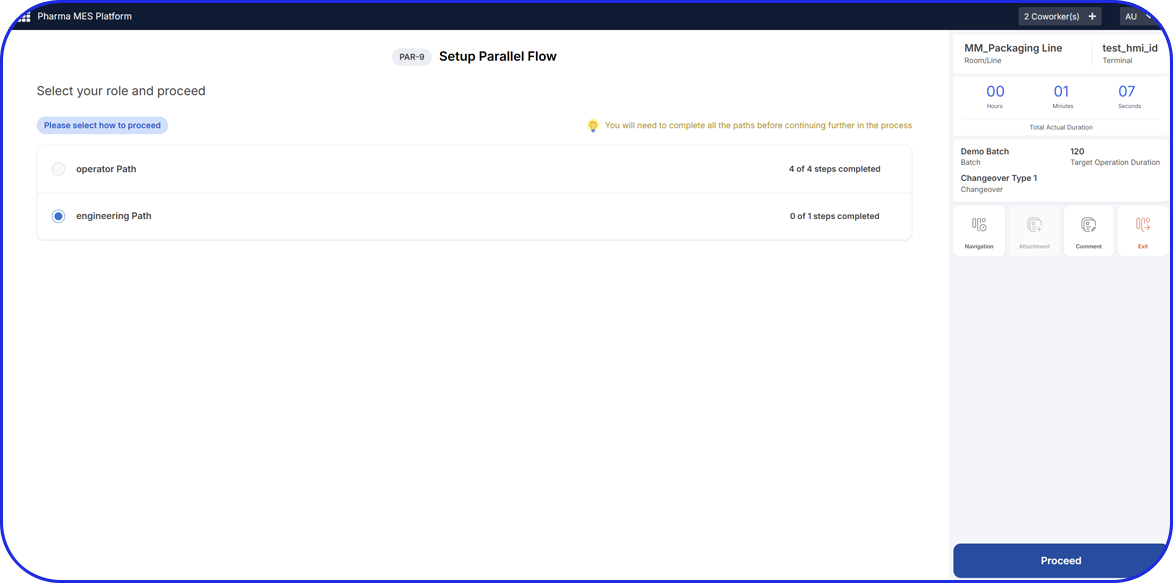
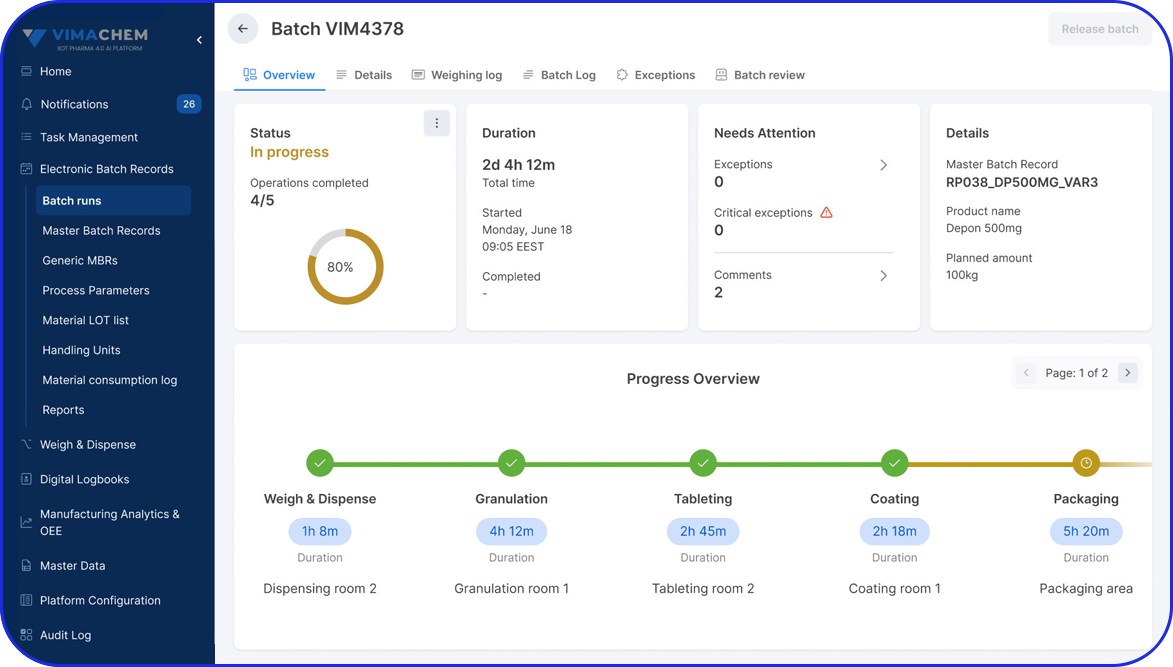
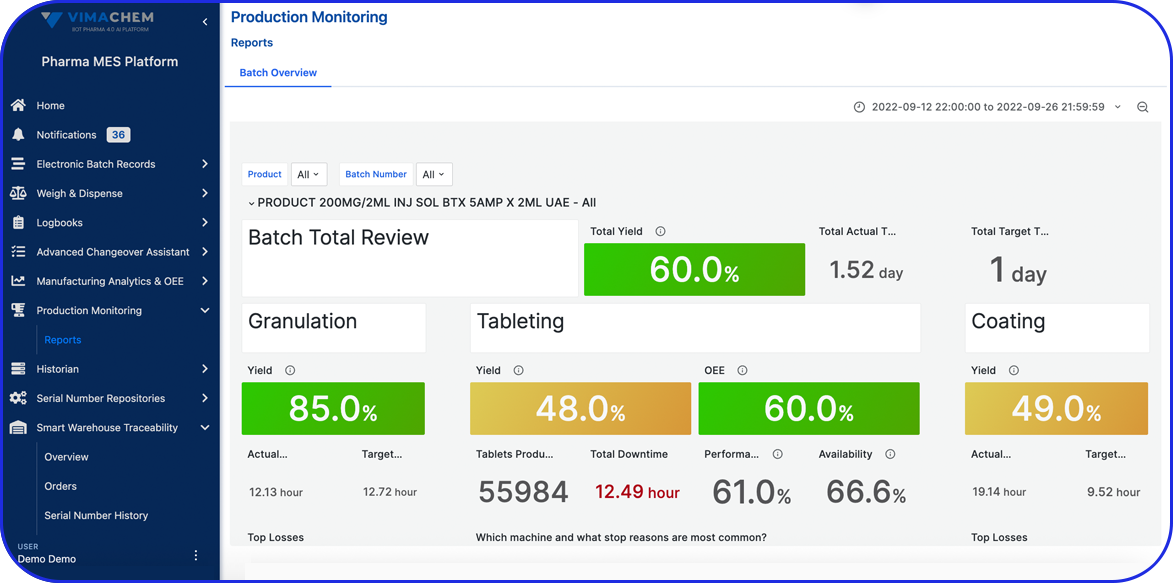
Designed especially for life science, Vimachem’s Manufacturing Execution System (MES) leverages IIoT connectivity and AI-enabled analytics to connect and contextualize plant data, delivering meaningful, actionable information that drives decisions and improves the bottom line.
See how customers like Astrea Pharma and Labatec improved changeover processes through more accurate tracking and data-driven optimization.
Schedule your customized MES demo today.
// Want to learn more?