Sharp Sterile Establishes a Foundation for Multi-Site Manufacturing Analytics with Vimachem's OEE Platform
Sharp Sterile Establishes a Foundation for Multi-Site Manufacturing Analytics with Vimachem's OEE Platform
Company Profile

Organization: Sharp Sterile Manufacturing • Parent Company: Sharp Services • Company Size: 1,500 employees • Location: USA, UK & Netherlands • Industry: Pharmaceutical Manufacturing

2 Months
Implementation Time
The solution was implemented in just 2 months.

2 Sterile Fill-Finish Lines*
Initial Deployment Scope
Deployed across two sterile fill-finish lines to deliver immediate value.

1 Site
Phase 1 Implementation
Phase 1 launched at one site for focused and efficient delivery.

Multi-Site Organization
Long-Term Rollout Strategy
Built with scalability in mind to support future rollout across multiple sites.
Executive Summary
Challenge
Manual OEE tracking, limited visibility into manufacturing performance, inconsistent downtime reporting, and the need to establish a scalable platform capable of supporting future deployment across multiple manufacturing sites.
Solution
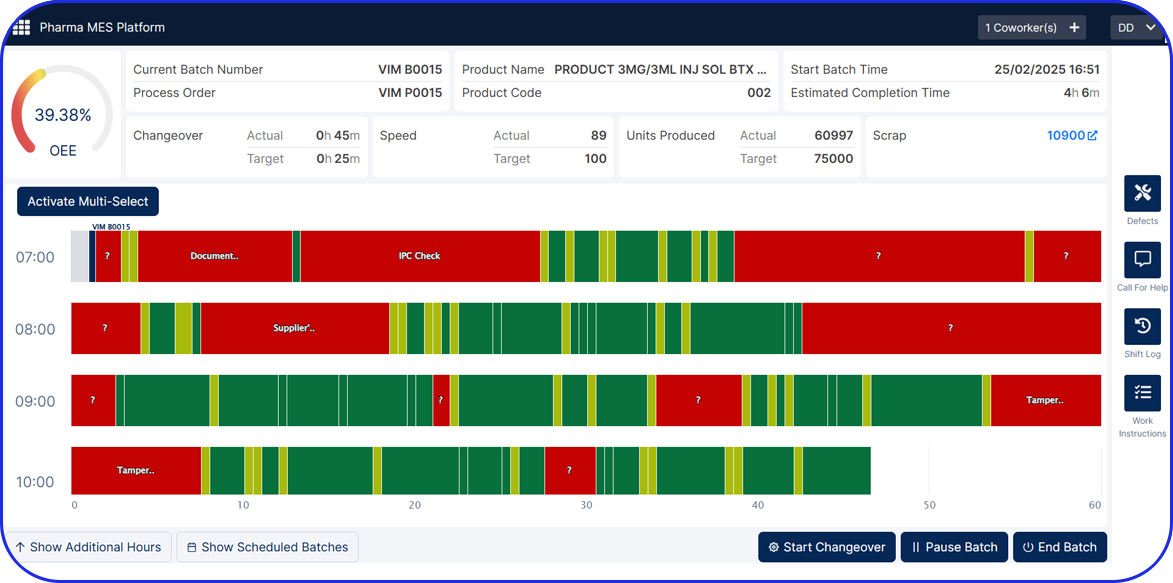
Implementation of Vimachem’s Manufacturing Analytics & OEE platform to automate machine data collection, provide real-time performance visibility, standardize manufacturing KPIs, and establish a foundation for future MES expansion.
Results
Sharp Sterile replaced spreadsheet-based reporting with real-time manufacturing insights, reduced administrative burden, improved identification of downtime and microstoppages, increased operator adoption, and created a scalable digital manufacturing foundation for future deployment across multiple sites."Success in an OEE implementation is really based upon trust. You want trust from your operators that they have a system and process they can rely on, and trust from leadership that the data they're being given is of high quality."
Stephen Kinney, Director of Business Applications & Analytics
Sharp Services is a pharmaceutical services organization supporting pharmaceutical and biotechnology customers through sterile manufacturing, clinical services, and commercial packaging operations. Sharp Sterile Manufacturing specializes in sterile injectable development and manufacturing, offering capabilities including isolator-based fill-finish, lyophilization, analytical services, stability studies, and terminal sterilization.
Focused on operational excellence and continuous improvement, Sharp Sterile sought to improve manufacturing visibility and establish a practical foundation for broader digital manufacturing initiatives.
Production Overview
Site footprint:
- One of multiple manufacturing sites within the Sharp Services network.
Manufacturing:
- Sterile injectable development and manufacturing.
- Isolator-based fill-finish operations.
- Support for vials, syringes, and cartridges.
- Lyophilization, analytical services, and stability studies.
Manufacturing operations:
- Manual filling capabilities.
- Semi-automated filling capabilities.
- Fully automated filling capabilities.
- Flexible production supporting multiple container formats.
Business model:
- Contract development and manufacturing services for pharmaceutical and biotechnology customers.
- Support for clinical and commercial manufacturing programs.
Manufacturing environment:
- Highly regulated sterile pharmaceutical operations.
- Combination of manual, semi-automated, and automated processes.
- Strong focus on operational excellence and continuous improvement.
The Challenge
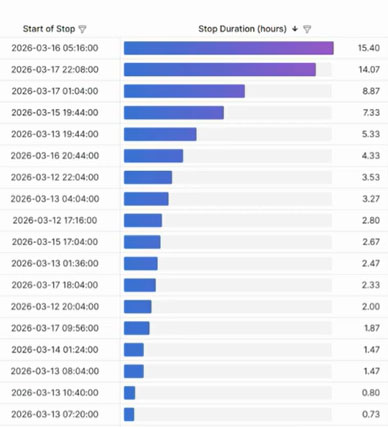
While Overall Equipment Effectiveness (OEE) is widely used across manufacturing industries, implementing OEE within sterile pharmaceutical operations presents unique challenges. Prior to implementation, Sharp Sterile relied on manual data collection and spreadsheet-based reporting to monitor manufacturing performance.
This created several operational challenges:
- Limited real-time visibility into production performance.
- Significant administrative effort associated with manual OEE tracking.
- Difficulty identifying recurring production losses and downtime drivers.
- Inconsistent stop reason definitions and reporting.
- Limited visibility into short-duration interruptions and microstoppages.
- The need to deliver value quickly without introducing unnecessary complexity.
At the same time, the organization wanted a solution capable of supporting broader digital manufacturing initiatives without requiring a full MES implementation from the outset.
The Solution
Sharp Sterile selected Vimachem’s Manufacturing Analytics & OEE platform as the first phase of a broader digitalization strategy.
Several factors influenced the decision:
- Rapid deployment with minimal disruption.
- IIoT-enabled machine connectivity and automated data collection.
- Real-time OEE monitoring and operational visibility.
- Modular architecture supporting future expansion.
- The ability to begin with manufacturing analytics while preserving a path toward broader MES capabilities.
- Flexibility to support varying requirements across multiple sites.
Rather than pursuing a full MES implementation immediately, Sharp Sterile adopted a phased approach designed to deliver immediate value while creating a scalable foundation for future growth.
As Stephen Kinney explained:
"Start with something small, a scale and scope that you can actually achieve and get that first quick win."
Implementation Journey
Key Steps in Implementation:
The project was delivered through a phased approach focused on technology, process definition, operator adoption, and long-term scalability.
1. IIoT Deployment & Machine Connectivity:
- IIoT devices were installed to collect machine-level production data and automate OEE calculations. The hardware deployment was completed quickly without requiring extensive modifications to existing equipment, allowing teams to focus on process and adoption rather than infrastructure.
2. Defining KPIs & Operational Standards:
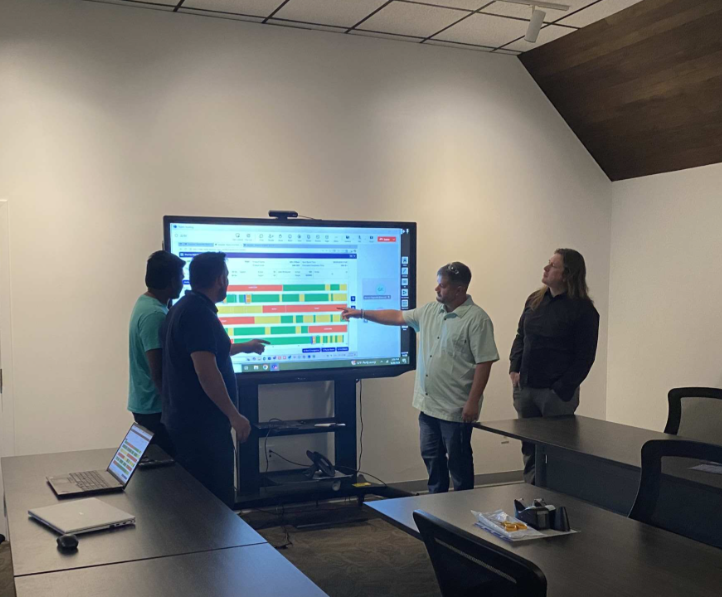
- A significant portion of the project focused on establishing common definitions for downtime, stop reasons, and manufacturing KPIs. Standardizing these measures ensured operators, supervisors, and leadership teams were aligned around trusted performance metrics and created a consistent framework for future continuous improvement.
3. Cross-Functional Collaboration & Operator Adoption:
- Operations, quality, IT, supervisors, and manufacturing personnel worked together throughout the project. Operator involvement was a key priority, ensuring the platform supported daily operations rather than creating additional administrative burden.
As Stephen Kinney noted,
"It did not become a surveillance implementation." Operators quickly recognized the value of the system, with many becoming enthusiastic advocates of the new approach."
4. Phased Deployment Strategy:
- Rather than attempting a large-scale MES transformation, Sharp Sterile deliberately adopted a focused approach, starting with Manufacturing Analytics & OEE to establish an early win and build confidence in the platform.
As Stephen Kinney explained,
"Start with something small, a scale and scope that you can actually achieve and get that first quick win."
5. Building a Foundation for Expansion:
- The initial implementation established a scalable framework that could support future digital manufacturing initiatives. As adoption continues, the broader organization is deploying Vimachem solutions across multiple sites, with different facilities leveraging varying combinations of operational analytics and GMP-critical functionality.
The Results
Within the first months of deployment, Sharp Sterile successfully transitioned from manual OEE tracking to automated, real-time manufacturing performance monitoring. The project has reduced reporting effort, improved visibility into production losses, standardized manufacturing KPIs, and provided teams with access to trusted operational data, establishing a strong foundation for future digital manufacturing initiatives.
Real-Time Operational Visibility
Operators, supervisors, and leadership teams now have access to real-time production performance information, providing greater visibility into manufacturing operations and supporting more informed decision-making.
Reduced Administrative Burden
Automated machine data collection significantly reduced reliance on spreadsheet-based reporting and manual data entry activities.
Improved Identification of Hidden Production Losses
The platform enabled the organization to identify recurring microstoppages and short-duration interruptions that were previously difficult to detect through manual reporting processes.
More Effective Performance Discussions
Access to trusted operational data has enabled teams to move beyond anecdotal observations and establish more objective discussions around manufacturing performance and continuous improvement opportunities.
Strong Operator Adoption
Because the platform reduced manual reporting activities rather than creating additional work, operators quickly embraced the solution.
As Stephen Kinney noted,
"The operators were actually quite excited about that."
Foundation for Multi-Site Expansion
The initial deployment established a scalable framework capable of supporting future rollout across additional manufacturing sites and broader digital manufacturing initiatives.
Looking Ahead
At the time of writing, the deployment remains in its early stages, with approximately two months of trusted production data available through the platform. The initial implementation has already demonstrated the value of automated data collection, standardized KPIs, and real-time operational visibility, establishing a strong foundation for continuous improvement and future analytics capabilities.
As adoption continues and additional historical data becomes available, Sharp Sterile plans to further expand its analytics capabilities and continue supporting broader digital manufacturing initiatives across multiple sites. While this case study focuses on Manufacturing Analytics & OEE at one site, the wider organization plans to deploy Vimachem solutions across multiple facilities, with different sites leveraging varying combinations of Manufacturing Analytics & OEE and GMP-critical data collection capabilities.
As Sharp Sterile continues to leverage its growing body of operational data to drive continuous improvement, Vimachem looks forward to revisiting the project and reporting on longer-term OEE trends and performance gains after six months of operation. Stay tuned for the next chapter of the journey.
Conclusion
By implementing Vimachem’s Manufacturing Analytics & OEE platform, Sharp Sterile established a practical starting point for manufacturing digitalization while delivering immediate operational value.
The project enabled the organization to transition from manual reporting processes to real-time manufacturing visibility, identify previously hidden production losses, reduce administrative burden, and create a scalable foundation for future deployment across multiple sites.
Most importantly, the initiative demonstrated how a focused and phased approach to manufacturing analytics can deliver meaningful operational insights today while laying the groundwork for broader digital transformation in the future.
Watch Stephen Kinney Share How Sharp Sterile Transitioned from Manual OEE Tracking to Real-Time Visibility
Ready to Augment your Shop Floor Operations?
Ready to Augment your Shop Floor Operations?
Get started with real-time manufacturing analytics today.