Predictive Analytics In Manufacturing: Tools & Use Cases
Predictive Analytics In Manufacturing: Tools & Use Cases
Pharmaceutical manufacturing is under increasing pressure to improve operational visibility, reduce deviations, and maintain compliance while managing growing production complexity. In this environment, predictive analytics is becoming an important capability for manufacturers looking to move from reactive operations toward more proactive, data-driven decision-making.
That said, let’s take a closer look at how predictive analytics is shifting pharma manufacturing from reactive firefighting to staying ahead of deviations.
What Is Predictive Analytics In Manufacturing?
Predictive analytics in manufacturing is the use of statistical modeling and machine learning to analyze historical and real-time data and forecast future outcomes. It empowers teams to predict equipment failures, optimize schedules, and detect quality issues before they escalate.
By providing foresight, it transforms raw data into proactive, actionable insights.
Unlike traditional analytics that only explain what happened in the past, predictive techniques help identify hidden patterns and forecast future possibilities and trends. This enables manufacturers to identify trends, anticipate operational risks, and make more informed decisions before issues impact production.
Why Predictive Analytics Matters In The Manufacturing Industry?
Manufacturing is inherently complex. Just consider that a single batch failure can cost millions. Especially in today’s fast-paced supply chains, there’s no longer room to rely on intuition or manual data collection, which is often slow and prone to error.
Unplanned downtime continues to be a major challenge across manufacturing environments, creating significant operational and financial impact. Manufacturers can face up to 800 hours of unscheduled downtime annually, with 30% of it unexpected, exactly the kind of volatility predictive systems are built to reduce.
More than that, by embracing data-driven decision-making, businesses can navigate rising competition, stringent regulatory requirements, and the constant pressure to reduce costs while maintaining uncompromising quality.
Predictive Analytics Maturity Journey: From Data To Information, Understanding & Knowledge
AIntegrating analytics tools moves the manufacturing process through a clear maturity journey:
- Step 1: Data. It all begins by collecting raw metrics to understand what happened (descriptive analytics).
- Step 2: Information. Data is processed to understand why something occurred (diagnostic analytics).
- Step 3: Understanding. With enough historical data at hand, it’s easier to forecast what could happen next using predictive models.
- Step 4: Knowledge. Finally, there’s the stage of prescriptive analytics, where the data provides the knowledge of what should be done to achieve the best outcome.
Predictive Analytics Use Cases In The Manufacturing Industry (Pharma)
Numerous high-impact predictive analytics use cases are implemented in pharma manufacturing today:
Predictive Maintenance
By analyzing sensor data from pumps, compressors, and centrifuges, operators can predict when a machine is likely to fail, significantly reducing unplanned downtime and maintenance costs.
In fact, a properly functioning predictive maintenance program can deliver 8% – 12% cost savings vs. preventive maintenance, and in reactive-heavy environments, savings opportunities can exceed 30% – 40%.
Quality Analytics (+ Scrap Reduction)
Quality is the cornerstone of pharma manufacturing. Using manufacturing predictive analytics, operators can monitor variables like temperature, humidity, and pressure within a reactor in real time.
For complex processes like tablet compression, which can involve over 30 parameters, predictive models can alert operators to deviations before they result in a failed batch.
This enables earlier intervention and more informed process adjustments before deviations escalate into batch failures, helping reduce waste and improve yield.
Demand Forecasting
Pharma manufacturers use predictive analytics to anticipate demand fluctuations, seasonality, and production requirements, helping teams align manufacturing schedules, inventory levels, and capacity planning more effectively.
These models help production teams better prepare for shifts in medication demand, including seasonal trends and sudden increases linked to public health events.
Inventory Optimization
Managing a complex drug supply chain is like a global relay race involving suppliers and regulators.
Predictive tools track temperature-sensitive biologics and optimize transportation routes to ensure on-time delivery while reducing costs.
In the pharma warehouse, these tools help maintain an inventory-to-sales ratio that reduces carrying costs and prevents drug shortages.
Workforce Planning
People are the most valuable asset, but the “Skills Gap” is a real challenge that’s estimated to leave 2.1 million manufacturing jobs unfilled by 2030.
To address this pressure, predictive analytics can help manufacturers forecast staffing requirements, plan shift coverage more effectively, and identify operational training needs before they impact production continuity.
This supports more resilient manufacturing operations while helping teams prepare for future workforce demands.
Production Planning
A common challenge in pharma manufacturing is deciding how much of a product to produce and at which location. To this end, predictive analytics can balance service levels with production constraints.
For example, some manufacturers use predictive models to optimize production across dozens of plants, eliminating bottlenecks and making the best use of available capacity. Then, detailed scheduling helps sequence tasks to minimize downtime and account for shift configurations.
Predictive tools also support detailed scheduling and resource allocation, helping manufacturers optimize equipment usage, shift planning, and task sequencing across production environments.
Predictive Analytics Tools For Manufacturing (Pharma)
Predictive analytics in manufacturing is only as good as the data you capture, the context you attach to it, and how quickly your teams can act on the insight.
So, here are the most popular tools that turn raw production data into usable predictions and actions.
- IIoT / Machine Connectivity Tools: They collect real-time signals from machines, PLCs, and sensors to create a clean, trustworthy data stream.
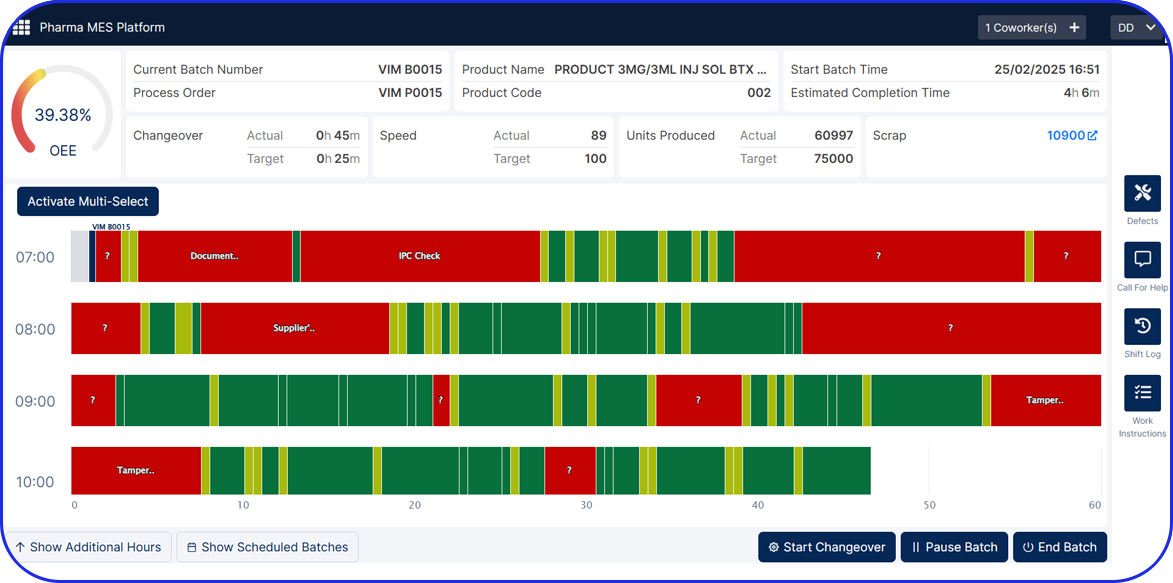
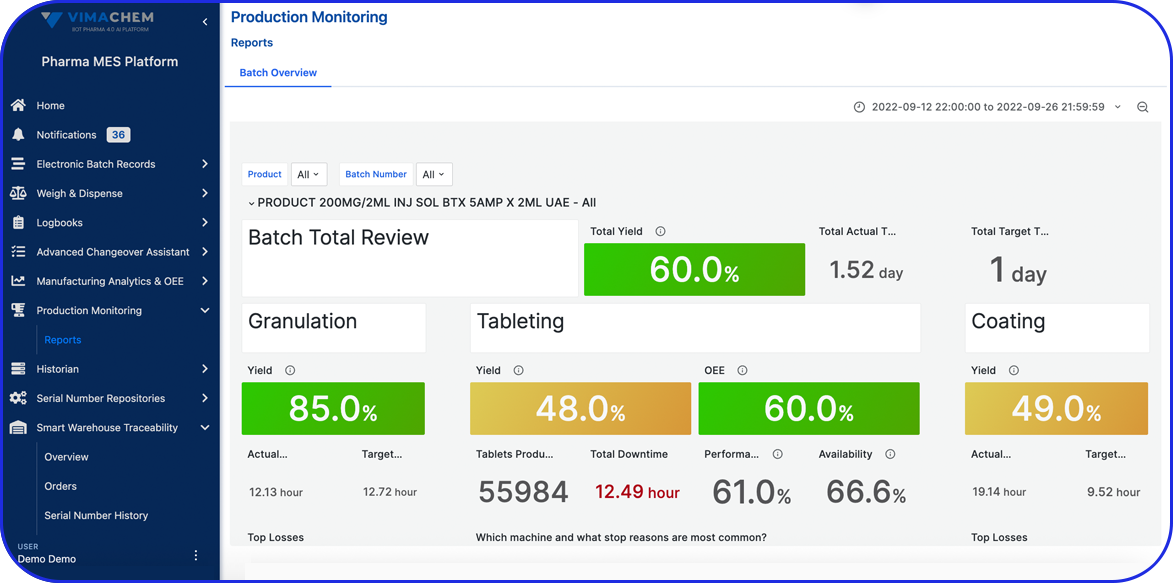
- Manufacturing Analytics & OEE Platforms: Transform raw production data into operational insights, helping manufacturers monitor performance, identify recurring losses, and improve visibility across production processes.
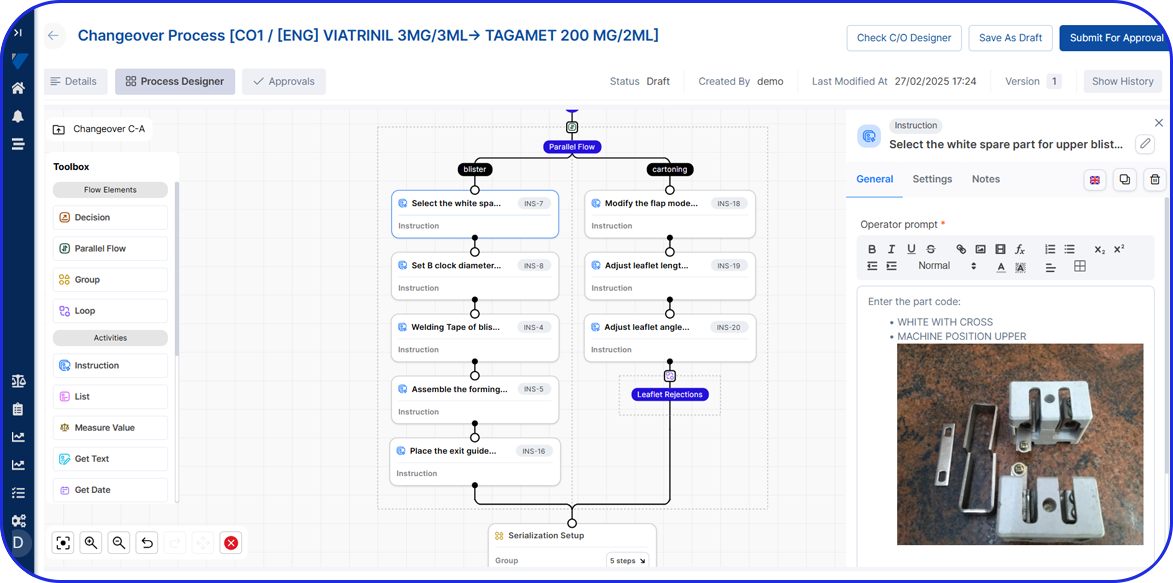
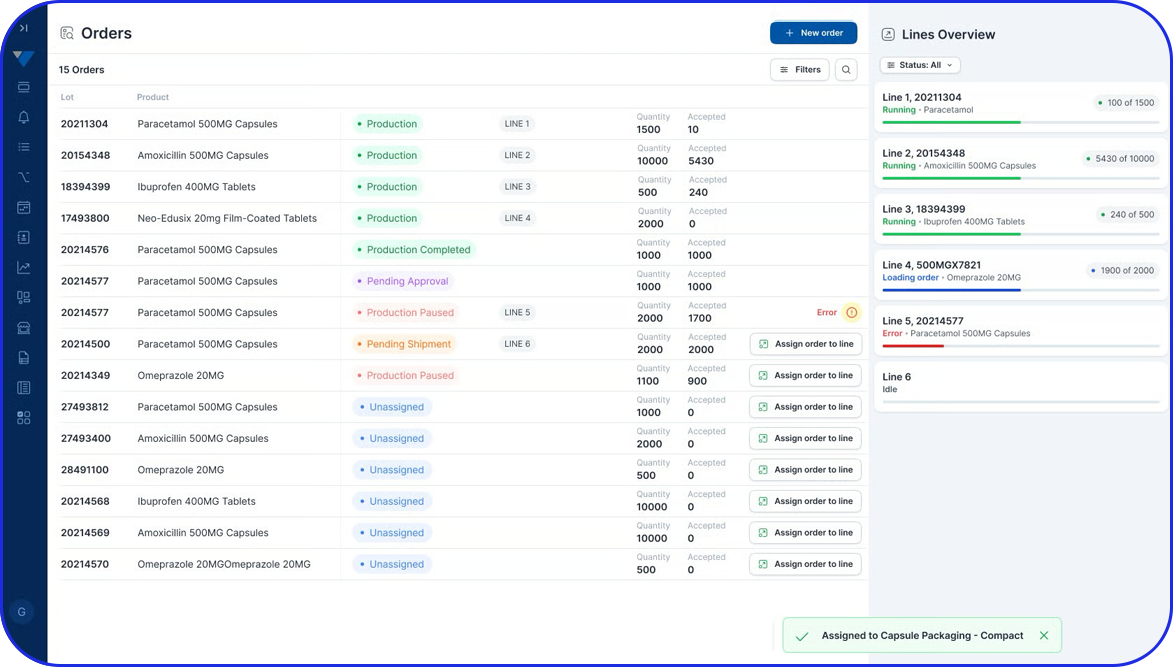
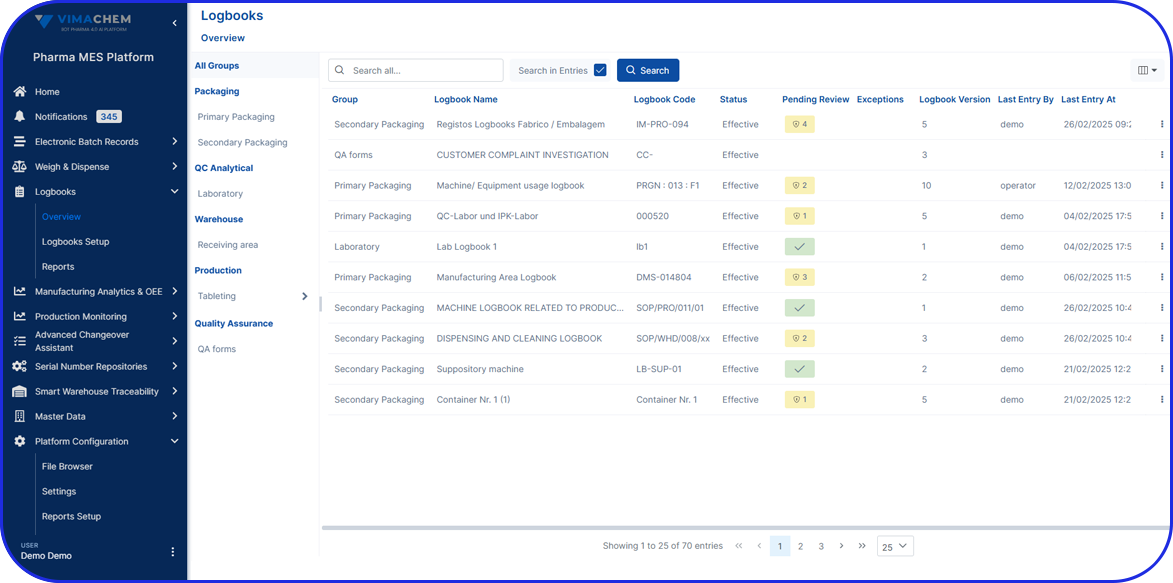
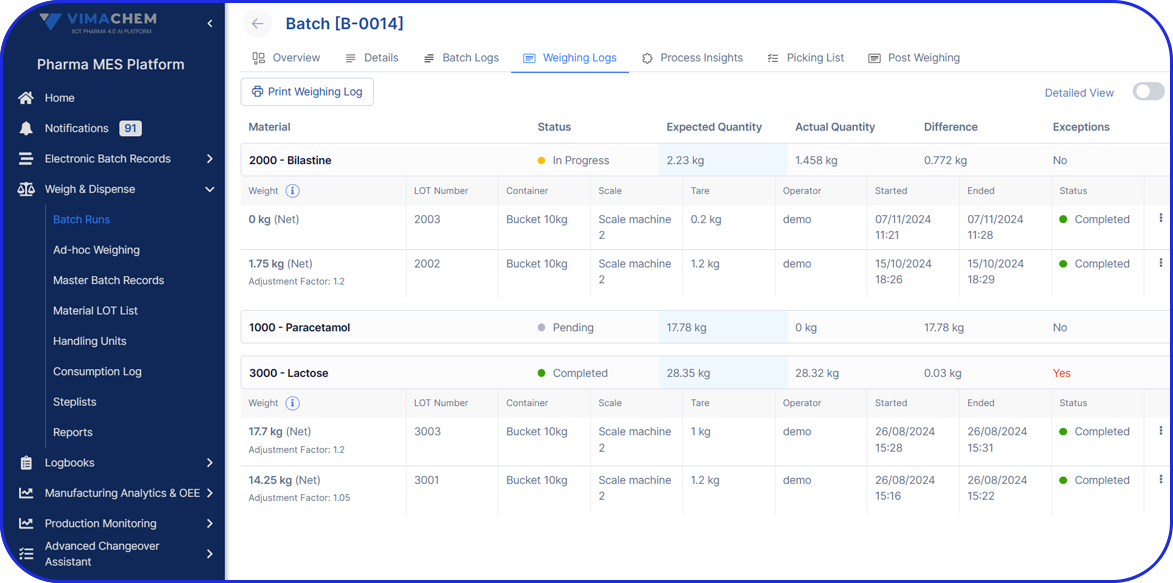
- MES (Manufacturing Execution System): Adds “manufacturing truth” to the data (what was made, when, on which line, and under which workflows or instructions), so predictions map to real manufacturing operations.
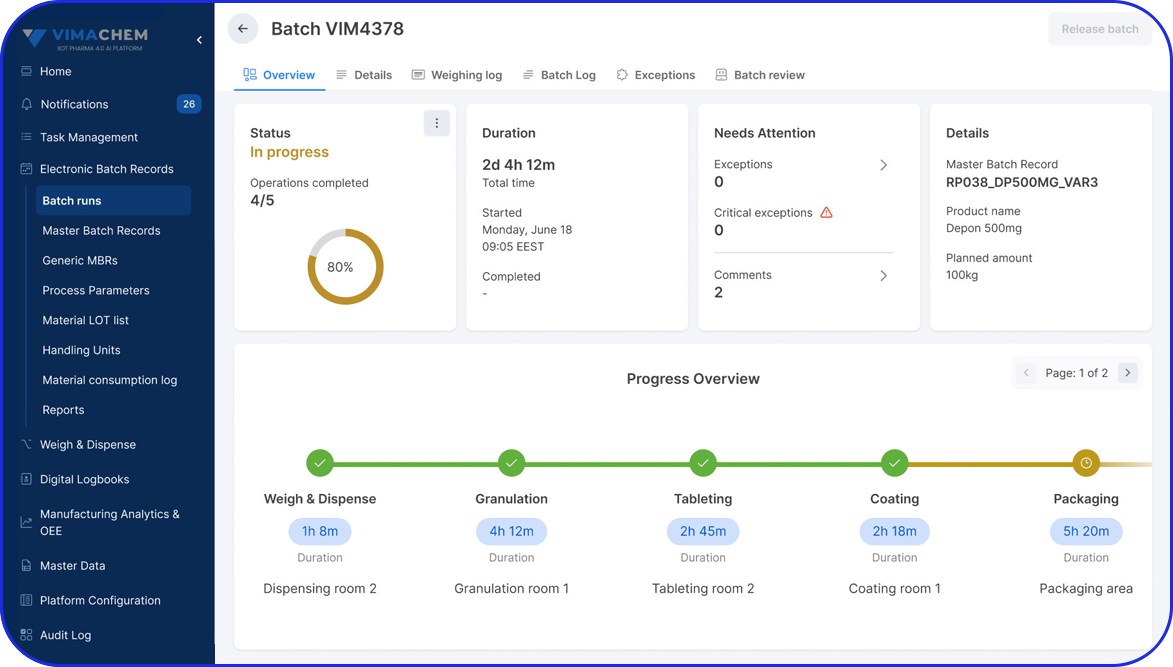
- Process And Batch Monitoring Analytics: Tracks process behavior in real time, flags deviations early, and supports more consistent outcomes through better visibility and control.
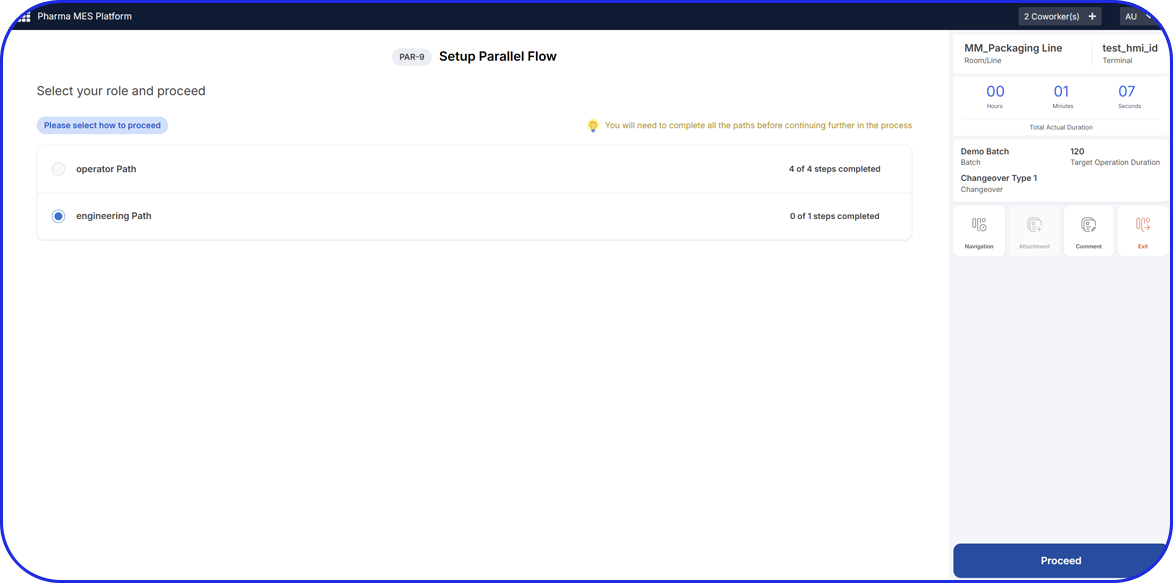
- Alerts, Dashboards, And Workflow Actions: Help teams respond faster to deviations, monitor production processes in real time, and support more consistent execution through connected digital workflows.
Build a manufacturing environment that stays ahead of deviations, not behind them.
// Want to learn more?