Advantages of a GMP-native OEE platform
Advantages of a GMP-native OEE platform

Nefeli Stylla
QA & CSV Specialist
𝐆𝐌𝐏-𝐍𝐚𝐭𝐢𝐯𝐞 𝐈𝐧𝐭𝐞𝐠𝐫𝐚𝐭𝐢𝐨𝐧𝐬
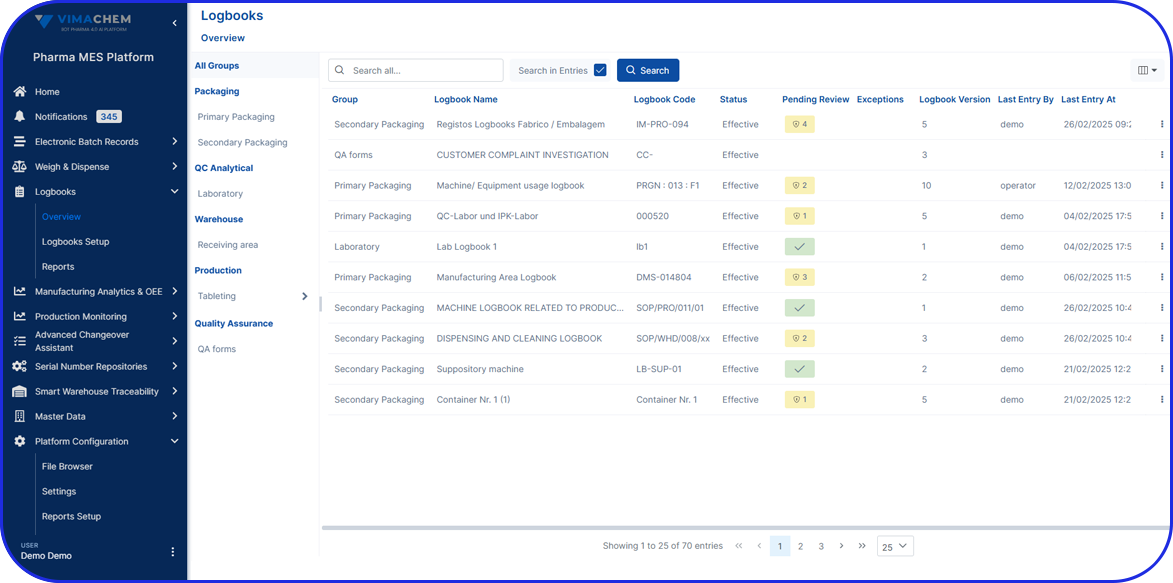
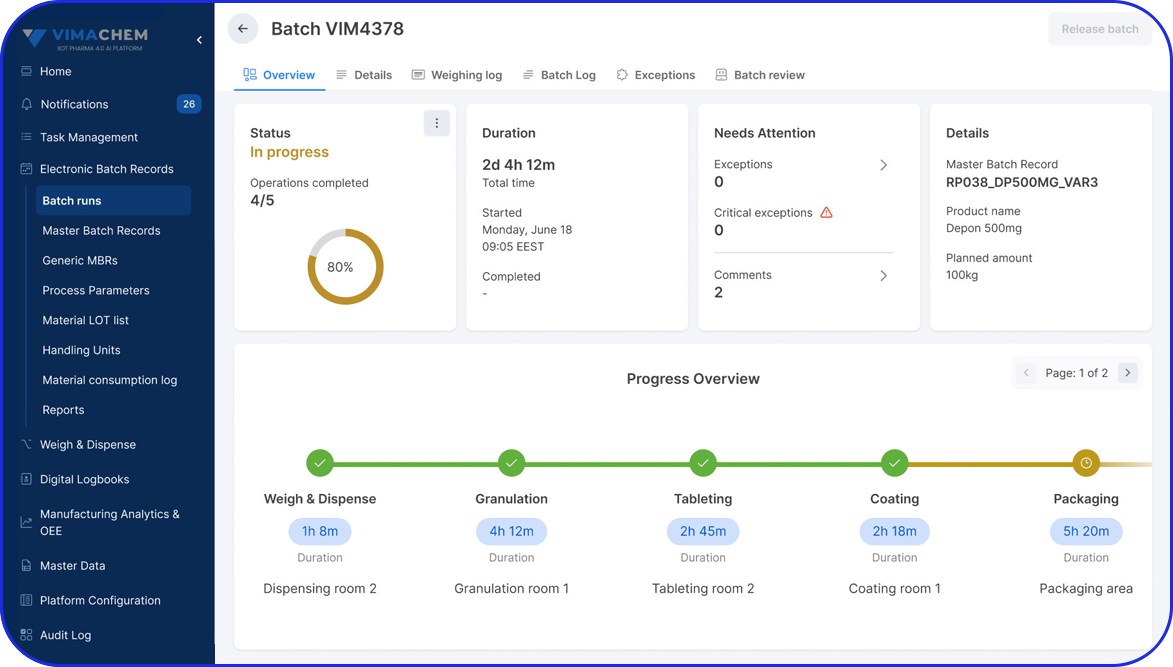
Native connectivity with eBR, Electronic Logbooks, ERP & shopfloor systems
𝐆𝐌𝐏-𝐑𝐞𝐚𝐝𝐲 𝐕𝐚𝐥𝐢𝐝𝐚𝐭𝐢𝐨𝐧
GAMP-aligned platform with IQ/OQ-ready validation documentation
OEE is a powerful tool for improving efficiency in pharmaceutical manufacturing, but OEE alone is not a GMP system. Its value depends on how it is designed, validated, and integrated within a GMP environment, enabling production data to be used reliably within regulated processes and connected manufacturing operations.
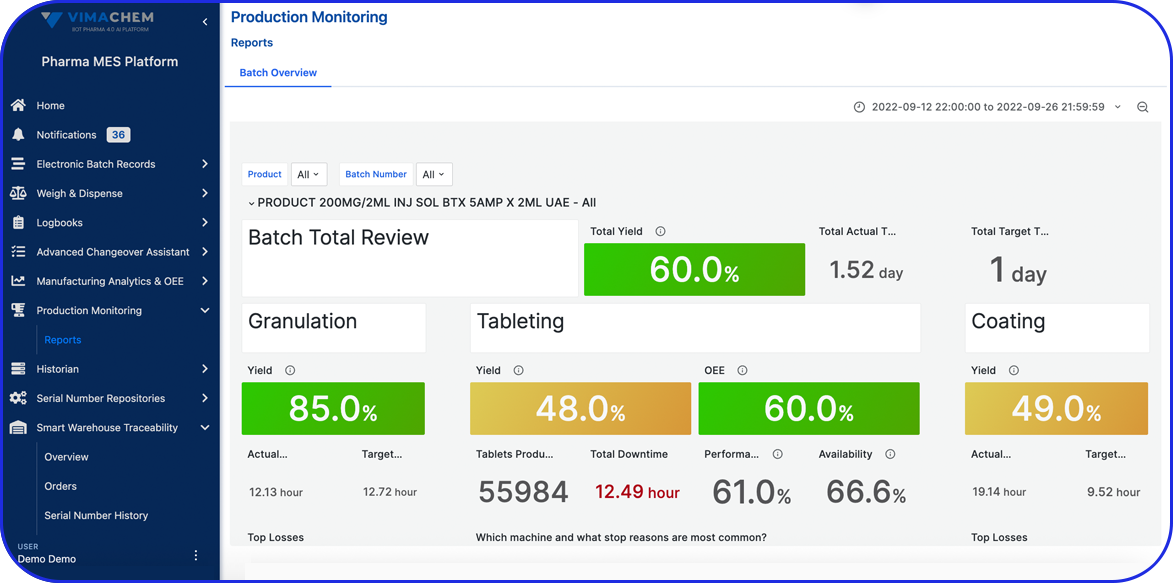
A typical OEE system improves efficiency. A GMP-native OEE platform generates structured, traceable production data that QA and Operations can rely on for batch analysis, investigations, and integration with systems such as eBR, Logbooks, and ERP.
From limited visibility to GMP-aligned performance
A mid-sized pharmaceutical manufacturer producing solid oral dosage forms across two packaging lines was facing several operational and compliance challenges:
- OEE was calculated manually using spreadsheets.
- Downtime reasons varied between operators and shifts.
- No direct link between production data and production execution.
- Investigations required manual data collection from multiple sources, including paper batch records, logbooks, and shift reports, before root cause analysis could begin.
Initial situation:
- Reported OEE: approximately 45% (with limited confidence in accuracy).
- Unplanned downtime: approximately 25% of scheduled time.
- Recurring minor deviations linked to incomplete or inconsistent data.
Built to operate inside a GMP environment
After implementing Vimachem’s Manufacturing Analytics & OEE solution within a GMP-compliant platform, the following controls were established:
- Role-based access control to define who can view, configure, and approve actions.
- Full audit trail, tracking who did what, when, and where.
- Secure user authentication.
This ensured that all production data became controlled, traceable, and reliable.
Structured, reliable production data
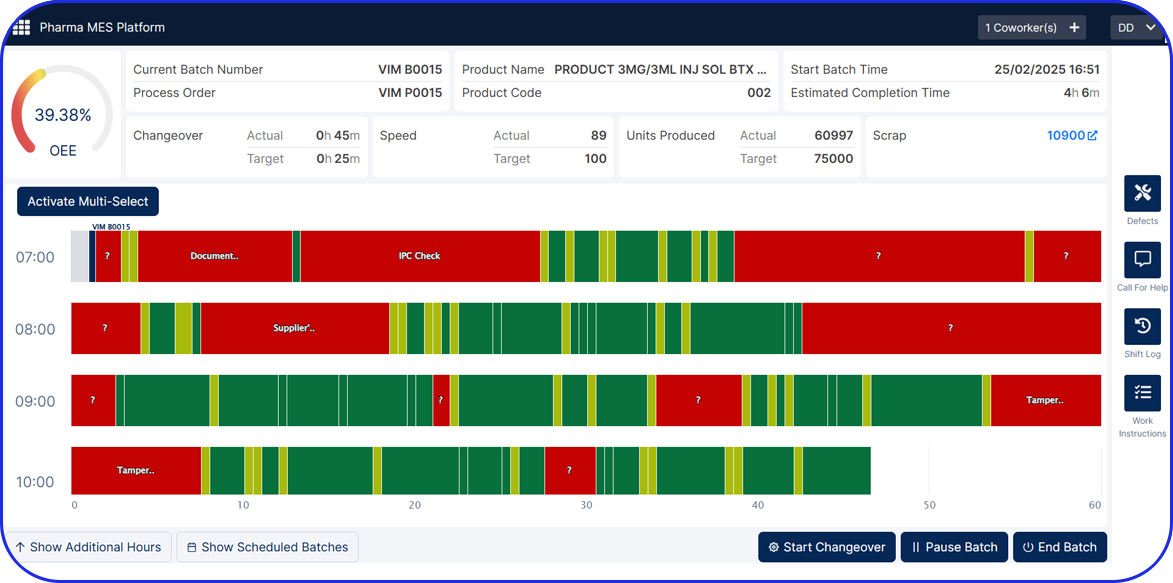
By connecting directly to machine interfaces and structuring data around batches, the system provided:
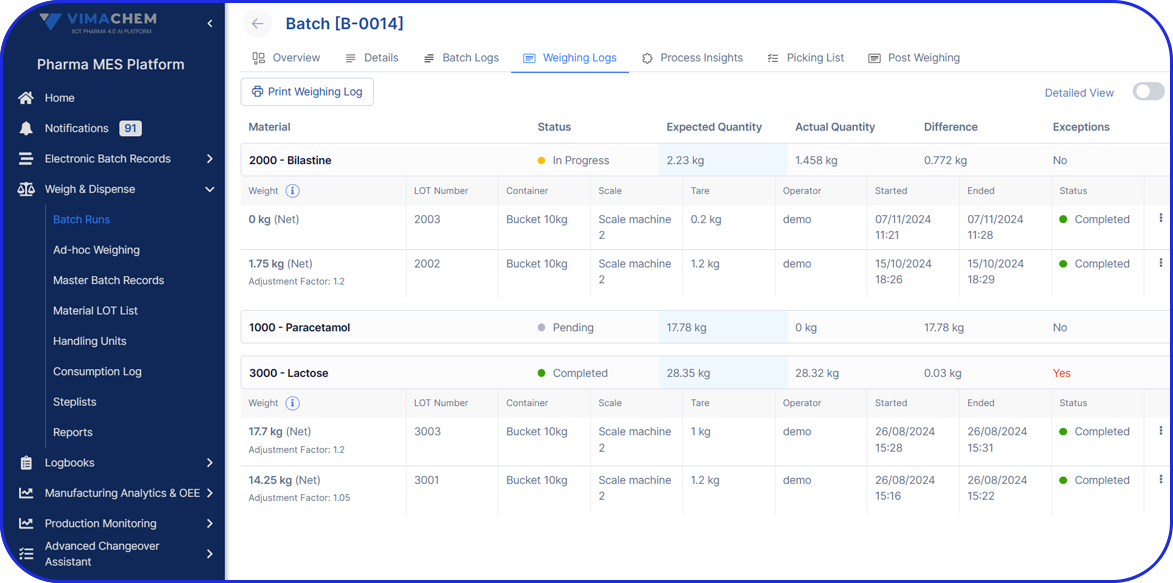
- Automatically captured batch start and end times.
- Cleaning and setup durations through structured stop reasons.
- Yield and rejection data based on real machine signals.
- Operator presence and manpower allocation.
- Automatic capture of machine events, including durations, alarms, and stop reasons, directly from equipment, reducing manual input and improving data reliability.
Batch reconciliation was also supported, allowing controlled adjustments with full traceability and automatic recalculation.

Take a Product Tour
Supporting investigations and consistency
With standardized stop reasons and time-stamped production events:
- Downtime analysis became consistent across shifts.
- Root cause analysis became faster and more reliable.
- Data interpretation improved across production and quality teams.
Results after implementation:
- OEE increased from 45% to 62% within six months.
- Unplanned downtime reduced from 25% to 18%.
- Previously hidden micro-stops (<5 minutes) revealed approximately 6% additional losses.
Enabling compliance through validation
The solution was delivered with an IQ/OQ-ready validation package and followed a GAMP-aligned approach.
OEE data became usable within GMP processes because:
- It produced structured, batch-based data within a validated system.
- That data was fully audit-traceable.
- It operated within a controlled, validated environment.
This allowed production data to be confidently used in deviations, investigations, and inspections.
The importance of integration
The real advantage came from integrating OEE with the MES layer.
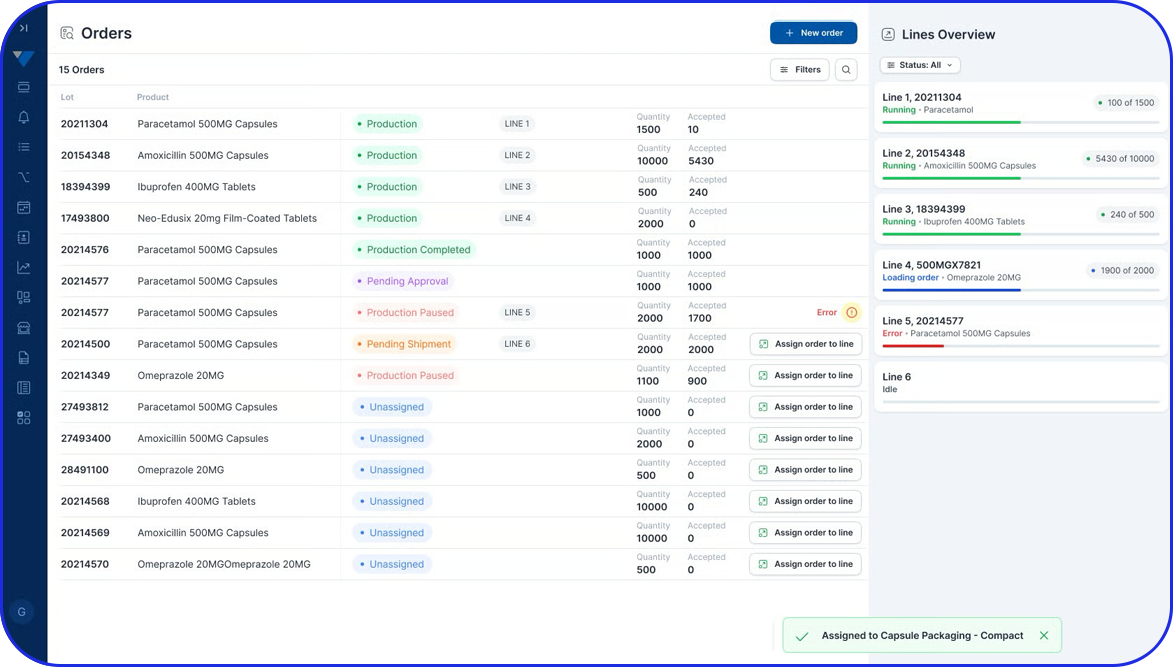
In this implementation, OEE data was aligned with production execution, creating a consistent batch context across manufacturing operations and eliminating manual data reconciliation between systems.
This enabled:
- Automatic alignment between OEE data and actual production orders.
- Consistent batch context across both execution and analytics.
- Elimination of manual data reconciliation between systems.
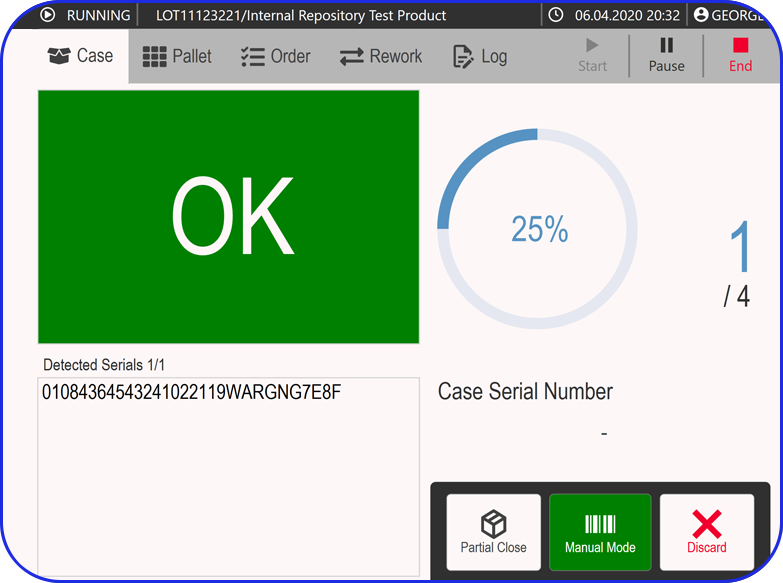
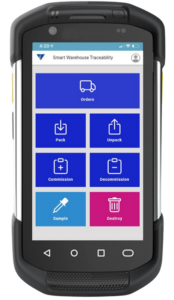
- A connected manufacturing environment where production data could be reliably used across related GMP processes. (Within a broader GMP-native platform, this can extend to systems such as eBR, Electronic Logbooks, ERP, Serialization, and other digital manufacturing workflows.)
Operational impact:
- Manual data handling reduced by approximately 40%.
- Deviations linked to inconsistent or missing production data reduced by approximately 30%.
Instead of operating as a standalone analytics tool, OEE data became a reliable extension of the production execution environmen
Avoiding common pitfalls
Generic OEE tools often fall short because they:
- Lack batch structure.
- Are not validated.
- Do not integrate with GMP systems.
In the initial state, spreadsheet-based OEE remained outside the GMP perimeter and created non-controlled data silos.
Future-proof your digital journey
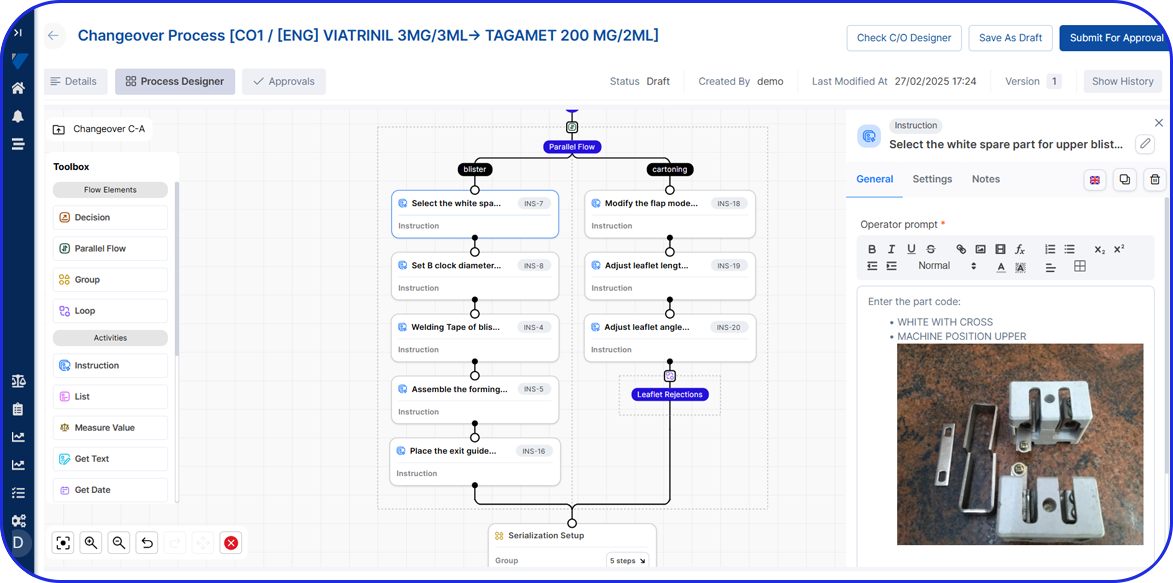
Starting with a unified platform allows expansion into areas like changeover management, electronic logbooks, and EBR.
This avoids multiple vendors and ensures that OEE data can be reused across the organization.
OEE does not inherently support GMP, but when it is built within a compliant environment, validated, and properly integrated, the data it generates becomes a reliable source that can support both operational efficiency and regulated processes. In practice, this translates into measurable improvements in performance, data integrity, and compliance readiness.
If you’re looking to improve performance while ensuring compliance, understanding how OEE data fits within your validated systems is key.
Get in touch to explore how a GMP-aligned approach to Manufacturing Analytics can support your operations.
// Want to learn more?