SCADA vs IoT: Which Is The Best Solution For Your Business?
SCADA vs IoT: Which Is The Best Solution For Your Business?
The industrial automation landscape is constantly evolving. As new technologies emerge, data acquisition, monitoring, and control capabilities improve, enhancing process performance, quality, and compliance.
Born out of Industry 3.0’s automation wave, systems like SCADA (Supervisory Control and Data Acquisition) played a key role in streamlining industrial operations, enhancing efficiency, and minimizing manual labor.
Similarly, in today’s digital era, Industry 4.0 marries physical production and operations with interconnectivity, machine learning, and real-time data powered by the Internet of Things (IoT).
Although, in many aspects, both SCADA and IoT share the common goal of data acquisition and improved operations, they have fundamental differences.
Let’s dive into the details, starting with some basic information.
What Is SCADA?
SCADA (Supervisory Control and Data Acquisition) is an industrial automation system that oversees and manages intricate operations. It gathers real-time data from sensors, devices, and equipment and presents it within a centralized user interface known as a Human Machine Interface (HMI).
SCADA enables operators to manage processes remotely, improving efficiency and ensuring safety.
SCADA systems perform a range of essential functions and are standard in various industries such as manufacturing, energy, and utilities. In fact, the SCADA Market size is estimated to reach over $20,213.43 million in the next few years, growing at a CAGR of 8.7% from 2024 to 2031.
SCADA supports businesses in multiple ways:
- Plant and process system monitoring.
- Industrial process and machine control (both manual and automated).
- Data collection and analysis.
- Alarm monitoring and notification.
- Reporting (real-time and historical).
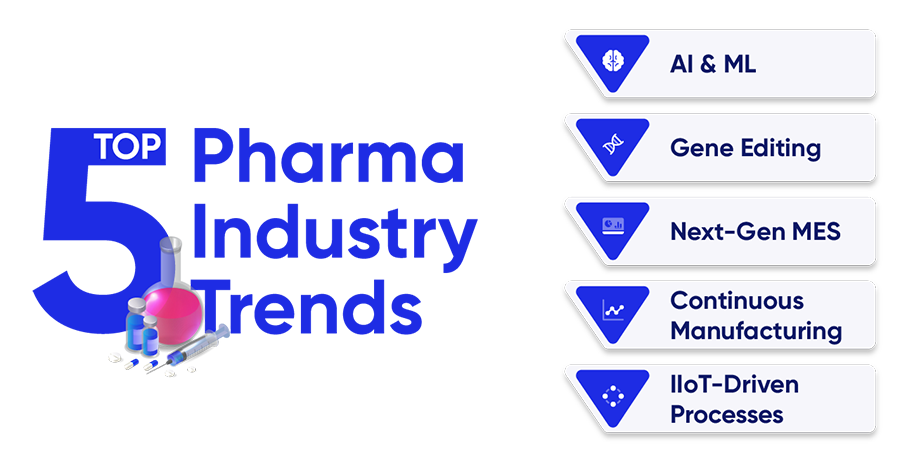
Top 5 Pharma Trends – Infographic
A brief history of SCADA
Historically, SCADA systems emerged in the 1960s and became widespread during the Industry 3.0 era of industrial automation, to meet the increasing demand for efficient, fully automated equipment control, particularly across long distances.
In the beginning, they used telemetry to transmit pertinent data from remote sites to monitoring equipment. Later on, Local Area Networking (LAN) technology and even PC-based HMI software allowed systems from different vendors to communicate with each other, as more and more devices were able to connect to the network.
Today, web-based applications incorporated into the SCADA software allow users to access real-time plant floor data from anywhere in the world.
However, interconnectivity and the birth of IoT take real-time data monitoring a step further.
What Is IoT?
IoT (Internet of Things) is the network of machinery and devices embedded with sensors and software that enable real-time data collection and exchange over the Internet. IoT systems perform data analysis and reporting that, among other things, enhances proactive processes and decision-making in industrial settings.
IIoT offers more open standards and interoperability than traditional SCADA. Extending beyond mere data collection, IoT integrates cloud technologies, advanced data analytics, and Artificial Intelligence (AI) to discern patterns, forecast outcomes, and refine operational procedures.
That’s why it’s increasingly implemented in manufacturing and other industries worldwide and the number of IoT devices in use has rapidly grown from 10 billion in 2019 to approximately 18.8 billion at the end of 2024.
Within Industry 4.0 environments, IoT systems share some core functions with SCADA.
However, SCADA and IoT are not the same. While SCADA data often serves as a foundation for IIoT initiatives, IIoT extends beyond traditional supervisory monitoring and control by enabling broader connectivity, cross-system data integration, and advanced analytics across industrial operations
SCADA vs IoT: The differences
Although SCADA and IoT share similar industrial use cases, there are some key distinctions:
Real-Time Data Analysis:
SCADA primarily focuses on real-time monitoring, visualization, and supervisory control of industrial processes, with reporting and historian capabilities.
IoT, on the other hand, extends this operational data by integrating information across machines and systems and applying advanced analytics and machine learning, making it well suited for large-scale data analysis.
Flexibility and Scalability
Traditional SCADA systems often have a more process-centric architecture and can be complex and costly to expand across multiple systems or sites. Adding new components may require engineering configuration changes, though modern connected or cloud-enabled SCADA solutions reduce many of these constraints.
However, IoT systems are inherently flexible and scalable. Utilizing cloud technologies and microservices, they can be easily adapted to evolving needs, making them suitable for rapidly growing companies or those continuously optimizing processes.
Cost
Setting up a SCADA system may involve high initial investment and ongoing maintenance costs.
IoT’s cloud-based platforms can reduce infrastructure requirements and enable more incremental deployment. By leveraging SaaS platforms, architectures, businesses can often avoid large upfront infrastructure investments, although connectivity and integration still require investment.
Standardization And Interoperability
Historically, many SCADA systems relied on proprietary protocols or legacy OPC DA connectivity based on DCOM technology, which could hinder seamless data exchange between devices from different manufacturers and lead to siloed systems.
In cloud-based SCADA, data exchange is facilitated but comes with security concerns. As IT professionals see it, extending these historically on-premise systems to the cloud creates fears of cyberattacks, data breaches, or unauthorized access to critical infrastructure.
Conversely, modern IoT and IIoT architectures commonly use open standards such as OPC UA, MQTT, and web APIs to enable secure, real-time communication and data exchange across heterogeneous devices and systems.
SCADA vs IoT: Which is best?
Choosing between SCADA and the Internet of Things, or even a combined solution, depends entirely on your specific needs, existing infrastructure, and priorities.
In certain industries, such as pharma and biopharma, IoT capabilities are increasingly important alongside existing SCADA environments.
Advanced IoT solutions, for example, can easily connect to all machines across a pharma production and packaging shop floor and scale as operations grow.
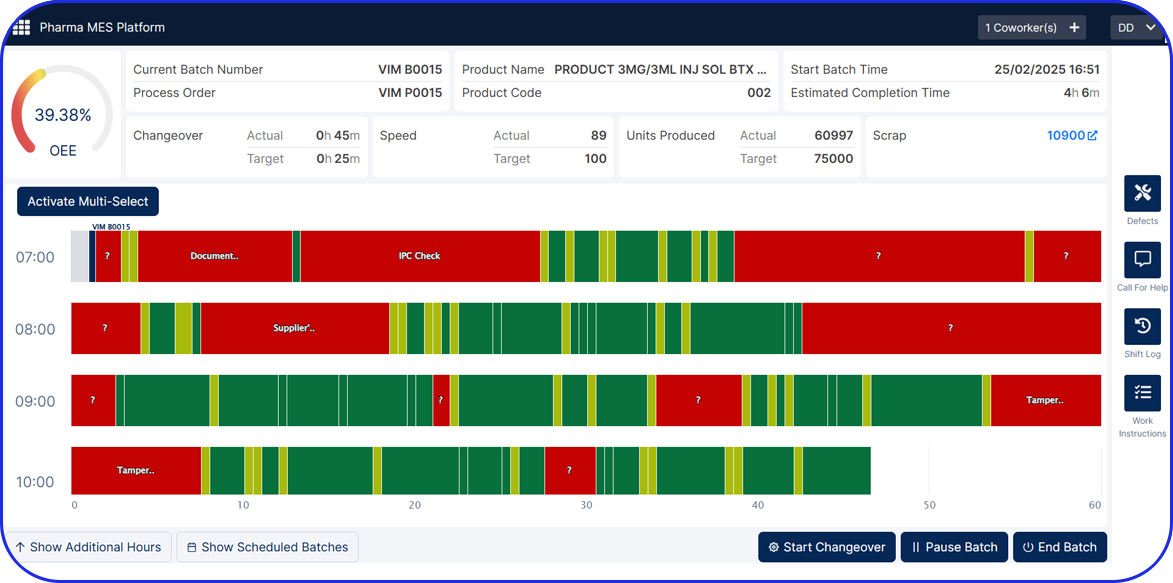
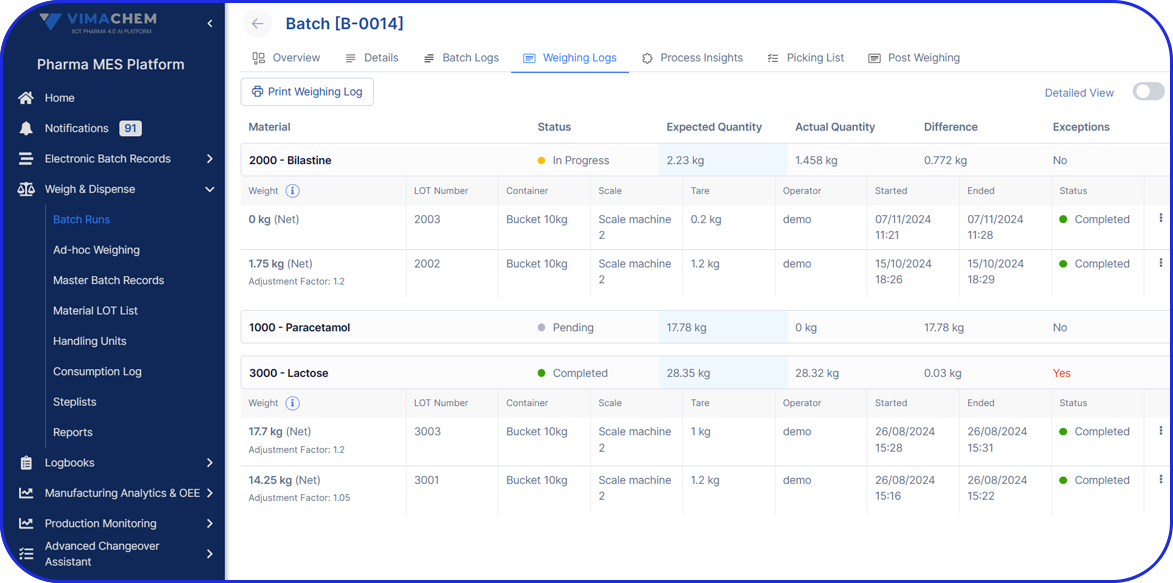
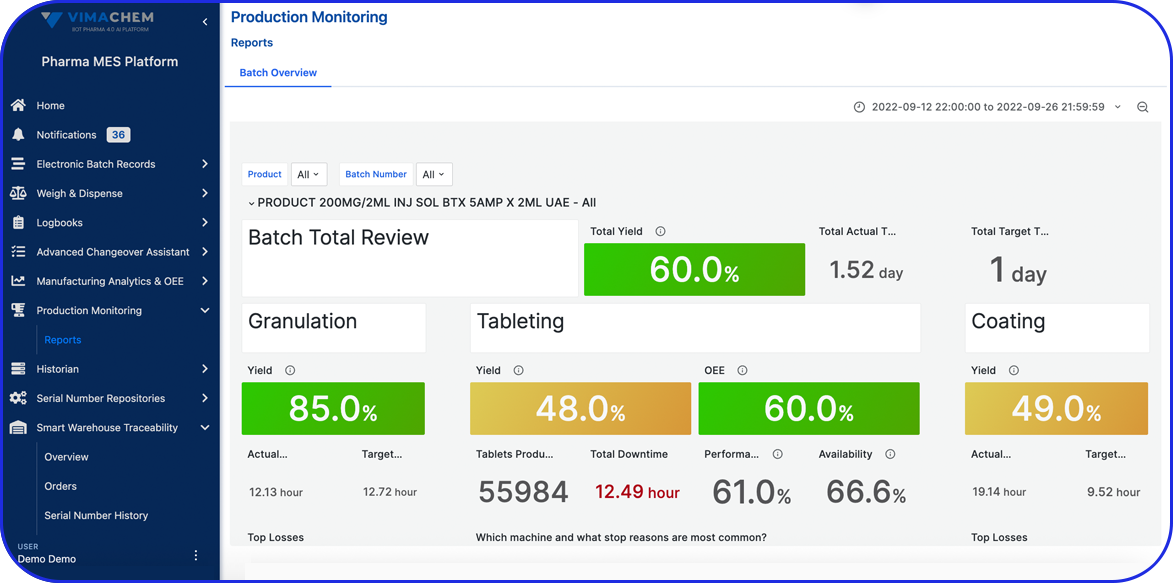
Moreover, modern Pharma MES platforms with IIoT connectivity can analyze vast amounts of data and assist pharmaceutical manufacturers in meeting data management requirements while enabling advanced statistical analyses.
IoT solutions also analyze real-time machine data to enable predictive maintenance alerts and faster response to emerging equipment issues, ensuring quality and compliance.
And these are just a few of the multiple benefits IoT has to offer.
// Find out more
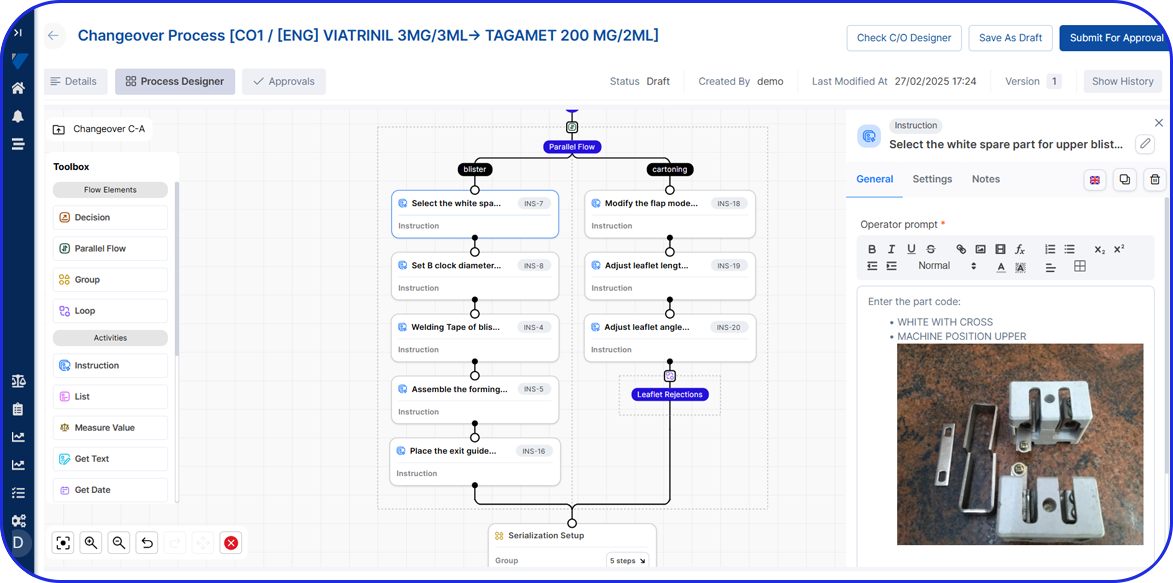
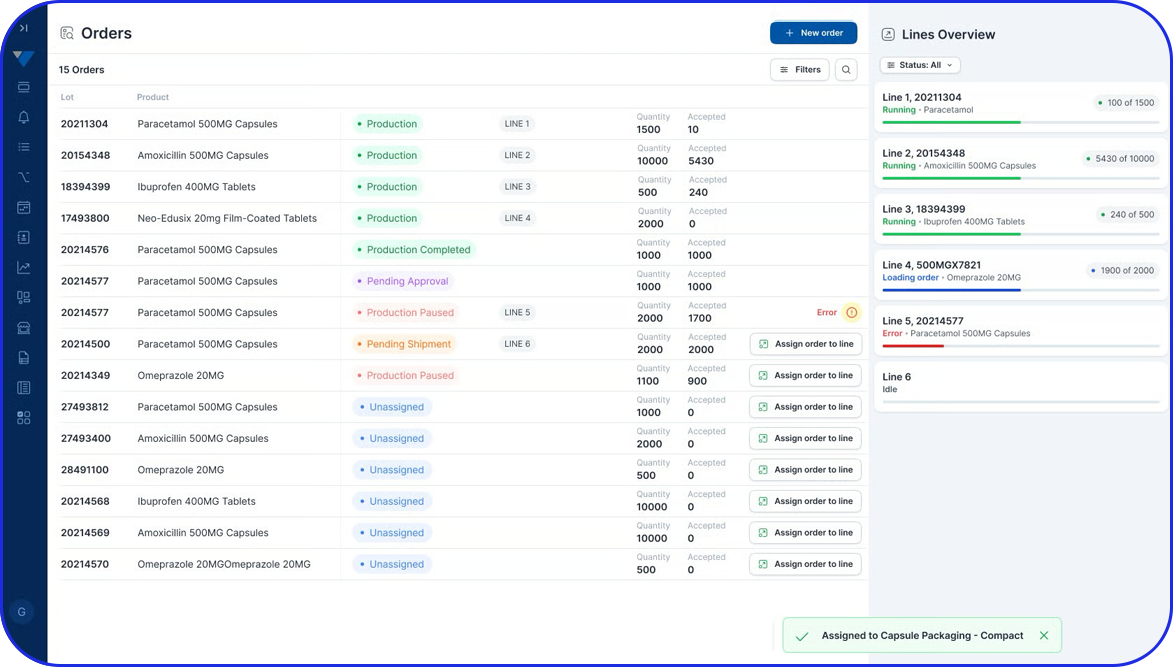
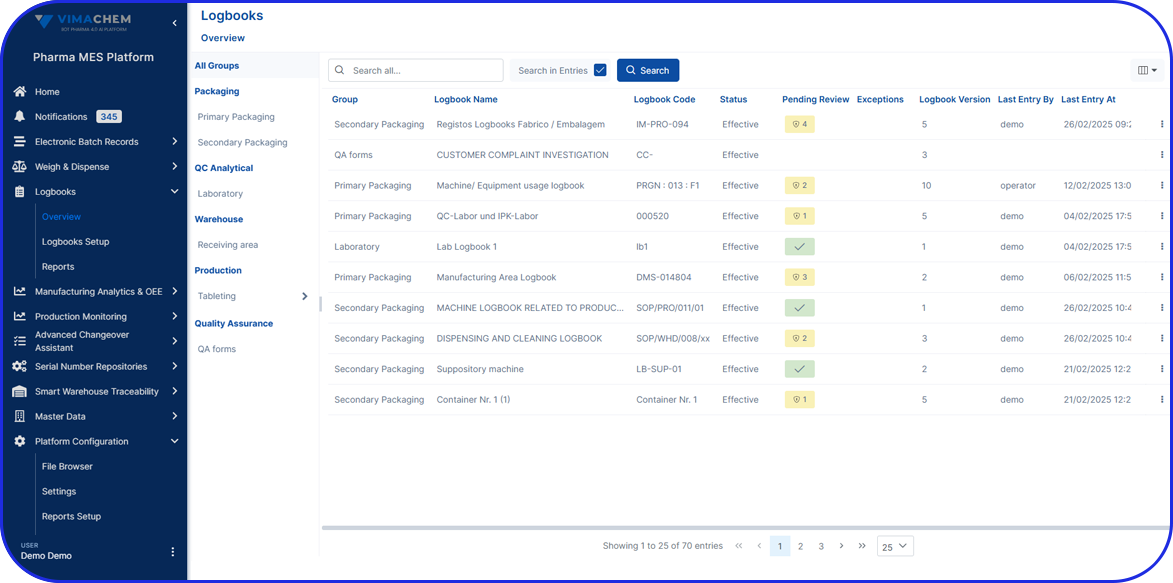
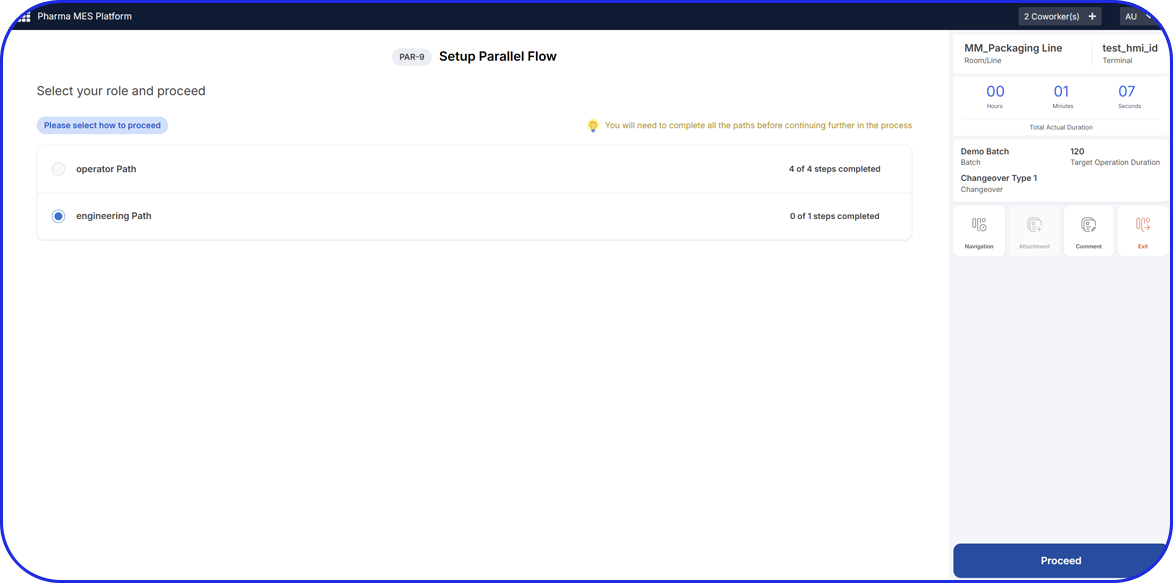
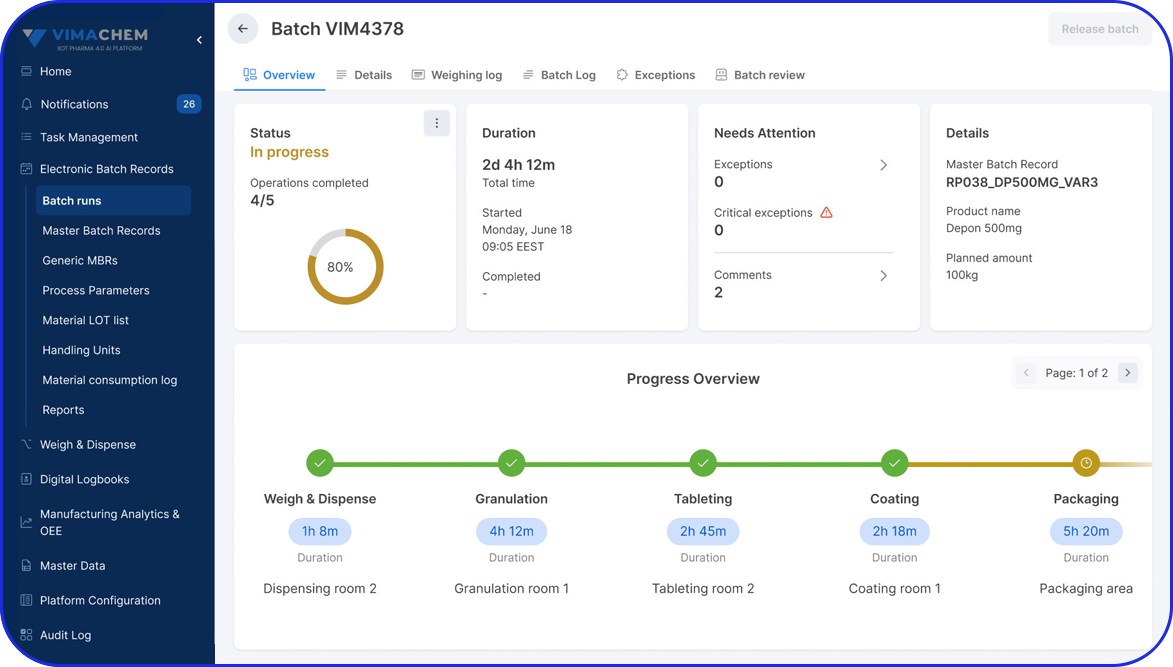
Taking advantage of IoT’s advanced capabilities, the Vimachem’s AI-enabled Pharma MES platform supports life science companies in their digital transformation journey, enabling them to achieve compliance, improved product quality, and business excellence.
// Want to learn more?