Pharmaceutical Warehousing: Optimize Your Pharma Warehouse
Pharmaceutical Warehousing: Optimize Your Pharma Warehouse
In today’s rapidly advancing life sciences sector, pharmaceutical warehousing and distribution are more than just logistical back-end operations. They’ve become essential pillars in safeguarding patient safety and preserving product quality.
With the global pharmaceutical market projected to grow from USD 1.77 trillion in 2025 to over USD 3.03 trillion by 2034, the scale and stakes across pharmaceutical supply chains are rising rapidly. At the same time, inadequate storage and temperature-control failures continue to cause tens of billions of dollars in losses across pharmaceutical supply chains each year.
In a forward-looking shift, with Pharma 4.0 taking hold, intelligent automation, real-time traceability, and data-driven decision-making have evolved into key drivers of operational excellence.
It’s thus becoming clear that optimizing pharmaceutical warehousing is no longer just about streamlining logistics; it’s a non-negotiable step toward building smarter, safer, and fully compliant supply chains from end to end.
Artificial intelligence (AI) And Machine Learning (ML)
Today, AI and ML are increasingly used in all the different stages of drug development.
During drug development, for example, Artificial Intelligence and Machine Learning analyze vast datasets in order to identify promising drug targets and create new drug compounds.
In many cases, they are programmed to identify how to repurpose existing pharmaceuticals for different conditions, which is much faster and less costly than new drug development.
For products already in use, ML and AI offer personalized treatment plans by analyzing and evaluating patient history data.
Gene Editing Technologies And Cell Therapies
Technologies such as CRISPR-Cas9 are changing the game for drug development through precise modifications of DNA sequences that produce targeted therapies for genetic diseases.
Scientists see here a promising potential to cure previously untreatable diseases, offering hope for patients with genetic disorders, cancer, and other life-threatening conditions.
Presently, however, there are some core challenges associated with these: manufacturing complexity, high costs, and onerous regulatory approval paths.
What Is Pharmaceutical Warehousing?
Pharmaceutical warehousing is the controlled storage and handling of medicinal products, ensuring their quality, safety, and efficacy from manufacturer to patient. It’s a critical link in healthcare supply chains – integral to maintaining regulatory compliance, optimizing drug product availability, and ultimately boosting a pharmaceutical organization’s ROI through streamlined operations.
Challenges In Pharma Warehousing
Warehousing in the pharmaceutical industry entails elaborate operational and regulatory challenges that set it apart from conventional storage and distribution logistics:
Stringent Regulatory Compliance
The pharmaceutical sector is governed by rigorous regulations, including Current Good Manufacturing Practices (GMP/cGMP), Good Storage Practices (GSP), and Good Distribution Practices (GDP) – all part of the broader GxP regulatory framework.
These guidelines govern every little detail: from environmental conditions and handling protocols to comprehensive documentation standards. Non-compliance is not an option for pharma manufacturers, as it can result in substantial financial penalties, let alone reputational damage.
Product Integrity
The delicate nature of pharmaceutical products, especially temperature-sensitive items such as biologics and vaccines, requires precise and steady environmental control, and where required, carefully orchestrated cold chain logistics.
Inventory Management Complexities
Inventory management in pharmaceutical warehousing isn’t just about finished products – it includes raw materials, excipients, APIs, and packaging components.
So, challenges can be anything from poor segregation and unclear labeling to mixed storage and inconsistent handling procedures, leading to errors, delays, and regulatory risks in both production and distribution.
Operational Inefficiencies
Issues like suboptimal facility layout, limited inventory visibility, and undertrained personnel can cause significant operational bottlenecks.
For example, disorganized storage may disrupt material flow during dispatch, production, and distribution.
Similarly, a lack of clear or consistently applied Standard Operating Procedures SOPs can lead to inconsistent practices. And, when combined with insufficient training, errors add up, and overall warehouse performance suffers.
So, how can pharmaceutical organizations optimize their warehouse operations and increase profitability?
11 Essential Best Practices For Optimized Operations
There are many different things pharma manufacturers can do to address the challenges of warehousing and distribution.
1. Streamline Regulatory Compliance Through Standardized Processes
Clear and consistently applied SOPs are essential for meeting GxP and other global compliance requirements.
Indeed, standardized workflows for receiving, handling, and dispatching materials significantly reduce errors and regulatory risks in the pharma warehouse. With well-documented procedures in place, organizations improve audit readiness and promote operational transparency.
2. Ensure Product Integrity With Environmental Zoning
Separating inventory based on specific storage conditions -such as temperature, humidity, and light exposure preserves product stability and therapeutic effectiveness.
Proper pharma warehousing needs dedicated cold rooms, quarantine areas, and ambient-controlled zones that reduce the risk of mix-ups, environmental excursions, and product degradation, safeguarding sensitive biologics, vaccines, and other drug products throughout their lifecycle.
3. Reduce Inventory Complexity Via Physical Segregation
Because a pharmaceutical warehouse manages diverse inventory -ranging from raw materials to secondary packaging- it needs careful segregation.
Allocating specific zones by material type, storage requirements, and production stage enables faster access, reduces misplacement, and minimizes search time. This type of physical separation supports batch control and traceability.
4. Enhance Stock Visibility With Real-Time Tracking
Leveraging technologies like barcode scanning, RFID systems, and automated replenishment tools allows real-time oversight of stock levels, expiration dates, and batch movements.
To optimize warehouse processes, pharma organizations can follow FEFO (First-Expiry-First-Out) or FIFO protocols and perform regular cycle counts. This approach minimizes stock discrepancies, reduces waste, and supports tighter inventory control across facilities.
5. Improve Material Flow Through Spatial Optimization
A warehouse’s physical design plays a central role in how materials move.
Typical spatial optimizations include positioning high-use items closer to processing areas, aligning zones with process flows, and leveraging vertical space through high-density racking. Such layout improvements have been shown to increase throughput by 35%.
The optimal layout designs for pharmaceutical warehousing are U-shaped and linear (or through).
5. Improve Material Flow Through Spatial Optimization
A warehouse’s physical design plays a central role in how materials move.
Typical spatial optimizations include positioning high-use items closer to processing areas, aligning zones with process flows, and leveraging vertical space through high-density racking. Such layout improvements have been shown to increase throughput by 35%.
The optimal layout designs for pharmaceutical warehousing are U-shaped and linear (or through).
U-Shaped Layouts
The U-shaped warehouse layout encircles central storage and channels all traffic through a single entry point, simplifying zoning and environmental control for sensitive medications within the facility.
U-shaped layouts also enable combined forklift trips that deliver new inventory and also pick up outgoing orders in a single, seamless loop. This process supports fast cross-docking, immediate dispatch, and urgent orders.
Linear Or Through Layouts
Meanwhile, linear layouts (also called ‘through’ layouts) streamline movement across the warehouse. Their clear, organized pathways simplify and expedite picking and packing, reducing errors and delays for medications with strict expiration timelines, among other benefits.
Moreover, this structure makes it easy to incorporate dedicated temperature-controlled zones and also supports high-volume throughput using multiple conveyor channels – a highly-effective setup for peak demand handling.
6. Reinforce Personnel Readiness With Structured Training
Targeted, task-specific training equips warehouse personnel with the knowledge needed to understand handling protocols, environmental controls and regulatory expectations.
Well-trained staff can execute warehouse procedures more accurately and efficiently, reducing human error and improving response to deviations. Overall, it reinforces operational stability and supports a culture of continuous improvement.
7. Accelerate Throughput With Visual Management Tools
Using signage, floor tape, bin labeling, and other visual aids simplifies navigation and speeds up key processes like picking and staging.
Such visual tools alleviate decision fatigue, remove guesswork, support adherence to SOPs, and reduce time spent locating materials. All in all, they contribute directly to greater efficiency, responsiveness, and other lean practices.
8. Minimize Downtime with Proximity-Based Storage
Strategically storing raw materials and packaging close to kitting or production zones reduces walking distance and shortens replenishment cycles.
Indeed, proximity-based setups, support lean replenishment and reduced staging delays, and avoid production slowdowns due to missing components. Plus, they help reduce changeover time – even up to 24% in some cases.
9. Safeguard Products With Advanced Security & Safety Protocols
With pharmaceutical products carrying high value and strict safety standards, warehouses must maintain tight security to deter tampering and theft with controlled access, alarm systems, video monitoring, and other advanced security infrastructure.
Within warehouse operations, thorough safety training, hazardous-material handling, and regular pest control, ensure a clean and a contamination-free environment.
10. Elevate Housekeeping & Waste Reduction Via 5S
Implementing the 5S methodology – Sort, Set in Order, Shine, Standardize, Sustain – fosters cleaner, more efficient workspaces.
By keeping essential tools and materials accessible and environments uncluttered, pharma warehouses can significantly eliminate non-value-adding activities, stay audit-ready and maintain high efficiency.
But more than that, 5S embeds discipline into daily routines and contributes to enduring warehouse productivity and quality in the realm of pharmaceutical manufacturing.
11. Invest In Strategic Planning & Future Outlook
Beyond operational best practices, long-term planning is critical for sustained efficiency and scalability.
This involves designing adaptable warehouse infrastructures, fostering strategic partnerships with logistics providers, and developing comprehensive risk management plans for potential disruptions – such as natural disasters or transportation delays.
The Role of Technology In Pharma Warehouse Optimization
Modern pharmaceutical warehousing relies heavily on automation and intelligent digital tools.
Warehouse Management Systems (WMS)
A robust WMS streamlines operations by automating core warehouse tasks such as inventory tracking, order picking, and shipping coordination. These systems provide real-time visibility across all warehouse functions.
Automation & Robotics
Implementing automated material handling systems – including conveyors, robotics, and Automated Storage and Retrieval Systems (AS/RS) – can significantly enhance operational performance. Among other functions, AS/RS systems support consistent cold storage performance while reducing energy consumption.
Warehouse Traceability & Serialization
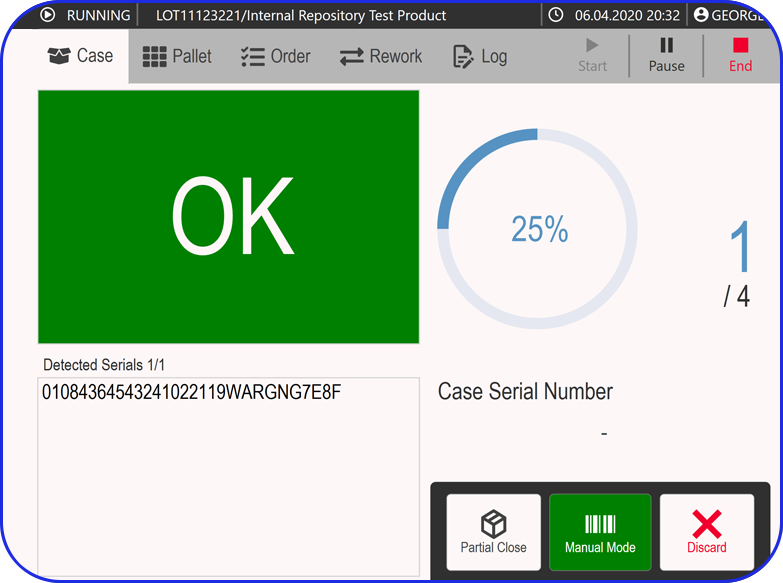
Advanced traceability solutions, including RFID, barcode scanning, and serialization/aggregation software, are essential for maintaining end-to-end visibility.
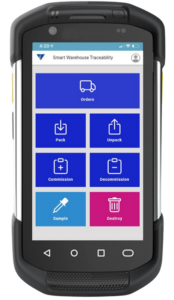
Other state-of-the-art tools such as Vimachem’s Smart Warehouse Traceability (SWT) help pharma warehouses stay compliant with global regulations like the US DSCSA and EU FMD, and prevent counterfeiting.
Data Analytics & AI
Artificial intelligence and advanced analytics play a growing role in warehouse optimization. They improve forecasting accuracy, identify potential supply chain disruptions, and guide smarter decision-making across inventory, storage, and routing.
How Vimachem Transforms Pharma Warehousing Operations
Vimachem empowers pharmaceutical companies to transform warehouse operations through a seamless blend of traceability, performance, and compliance solutions.
From real-time traceability with Smart Warehouse Traceability (SWT) to streamlined packaging line performance with Serialization Site Manager (SSM), its integrated tools eliminate bottlenecks, reduce errors, and ensure full regulatory compliance across global standards like DSCSA and EU FMD.
These technologies form the backbone of a scalable, digital infrastructure - one that transforms pharma warehousing from a logistical necessity into a source of strategic advantage.
// Want to learn more?